Next, let's look at two neighborhood apartment complexes 2.5 km west of the Street of the Dead and the related areas.
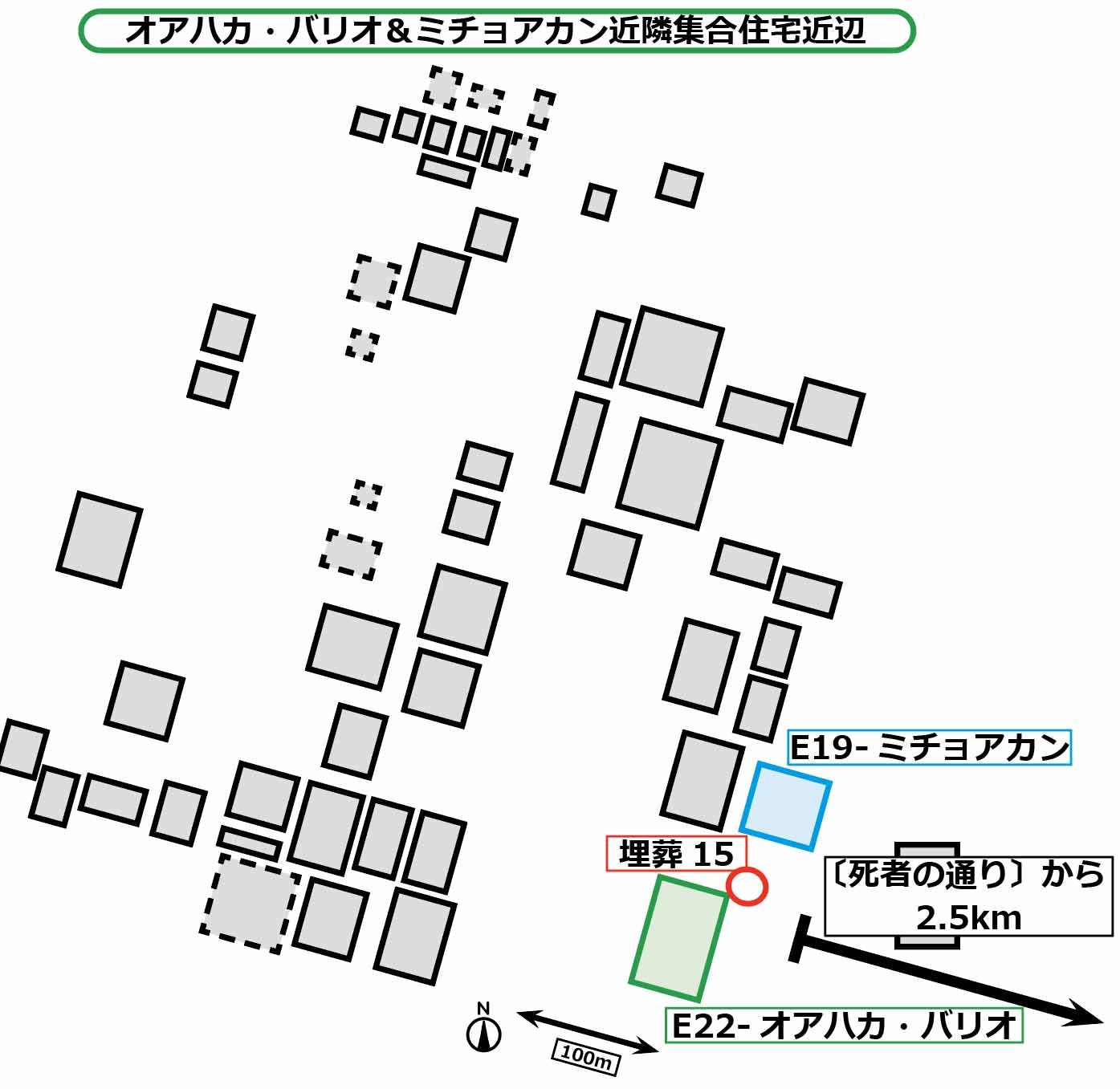
All of the areas on the map above have been converted into modern residential buildings. As for the grey areas, it seems that the owners allowed to enter private property and only the foundations of the outer walls were recorded. There are no reports of excavations. Each one is thought to have been one of the buildings in a neighborhood apartment complex. It appears that there were at least 50 buildings in an area of approximately 500 square meters.
From here on out, the land begins to climb into the Colorado hills.
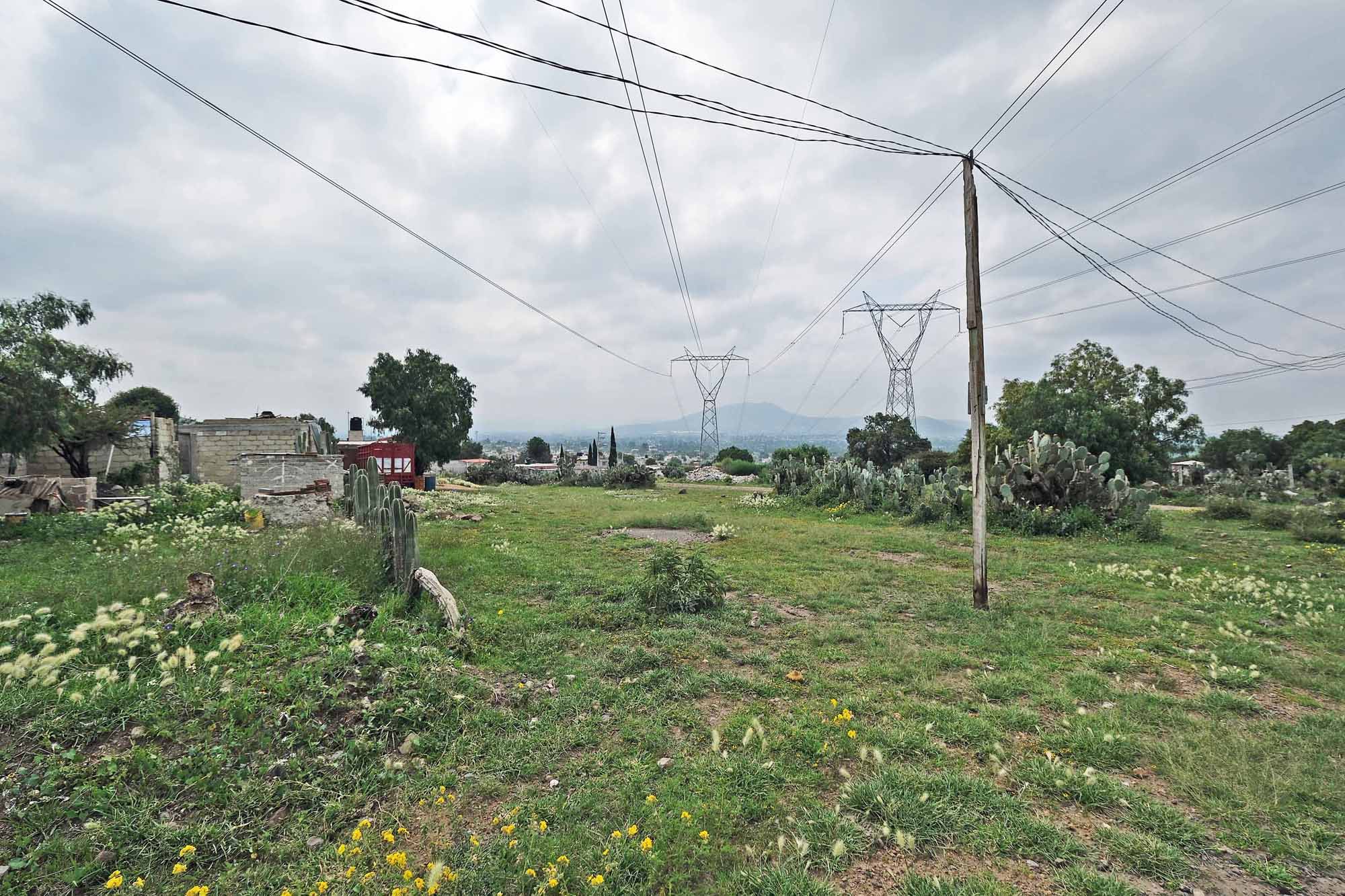
I look east with the Colorado hills at my back, but the city isn't clearly visible.
Oaxaca Barrio(=Tlailotlacan)
(Related: San Jose Mogote, Monte Alban, Dintz)
Pottery with reliable dates dates from 200 AD to 455 AD. Since 1966, only five pale pink buildings have been excavated.
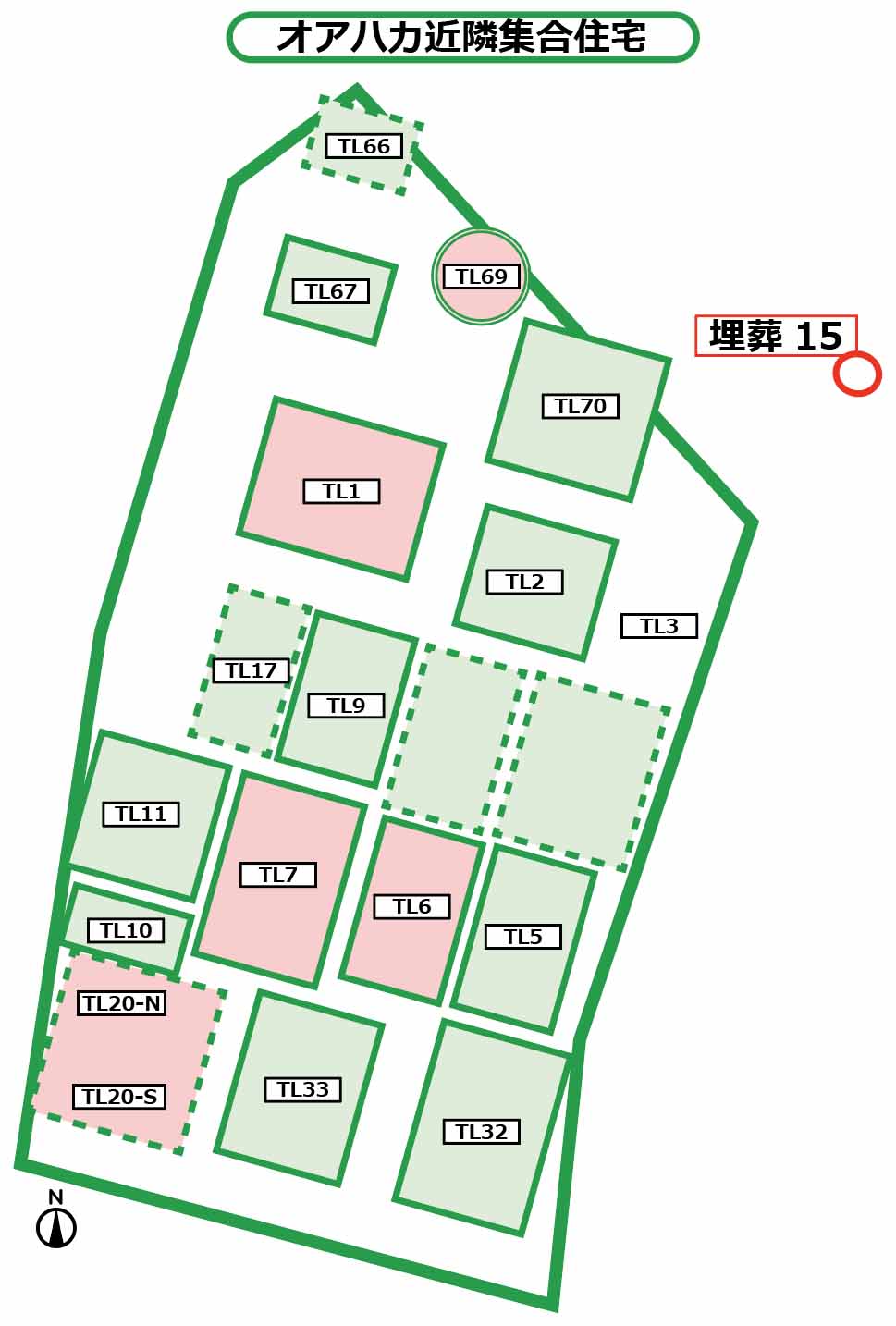
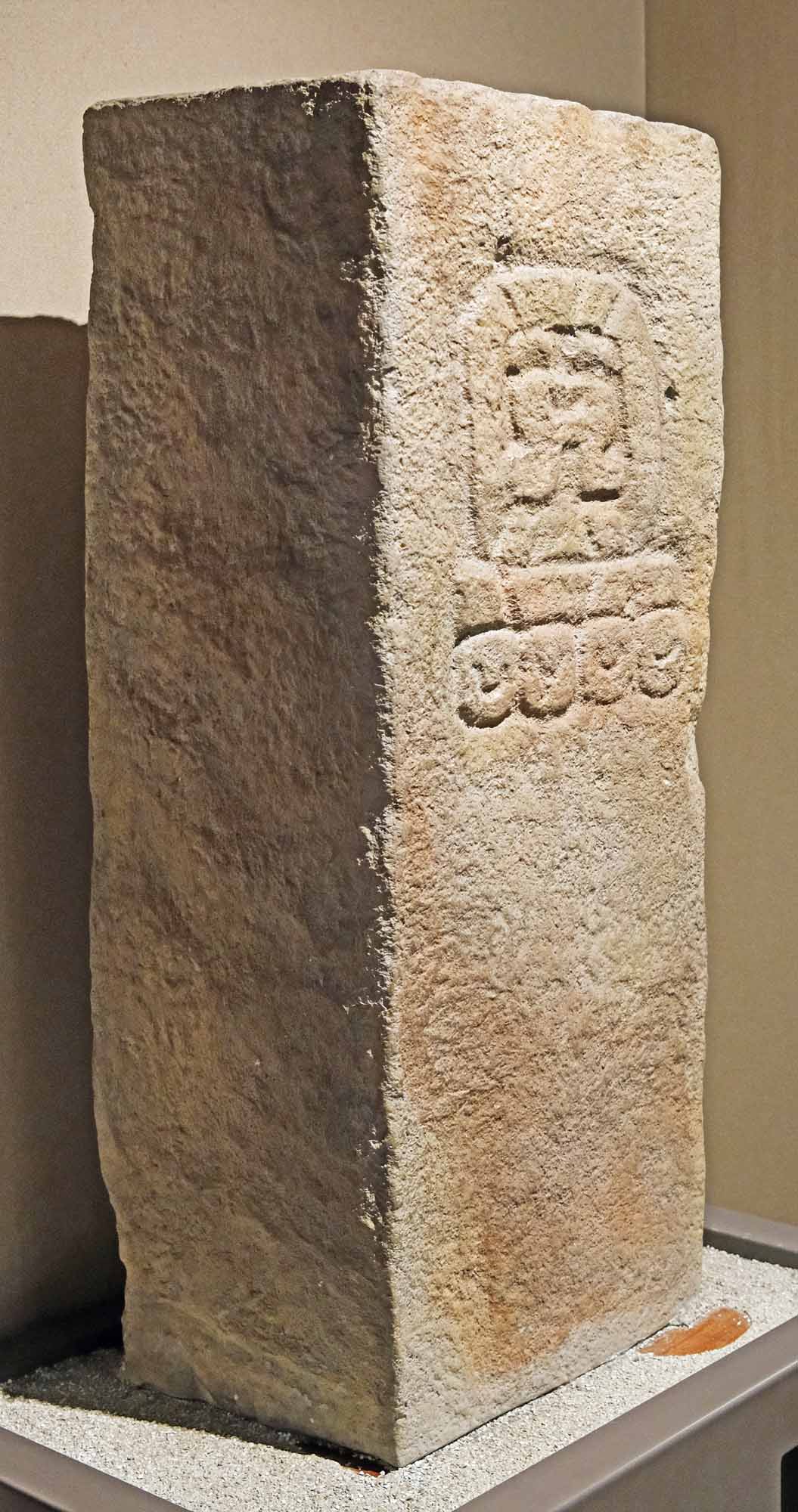
↑↑at Museum of Anthropology.
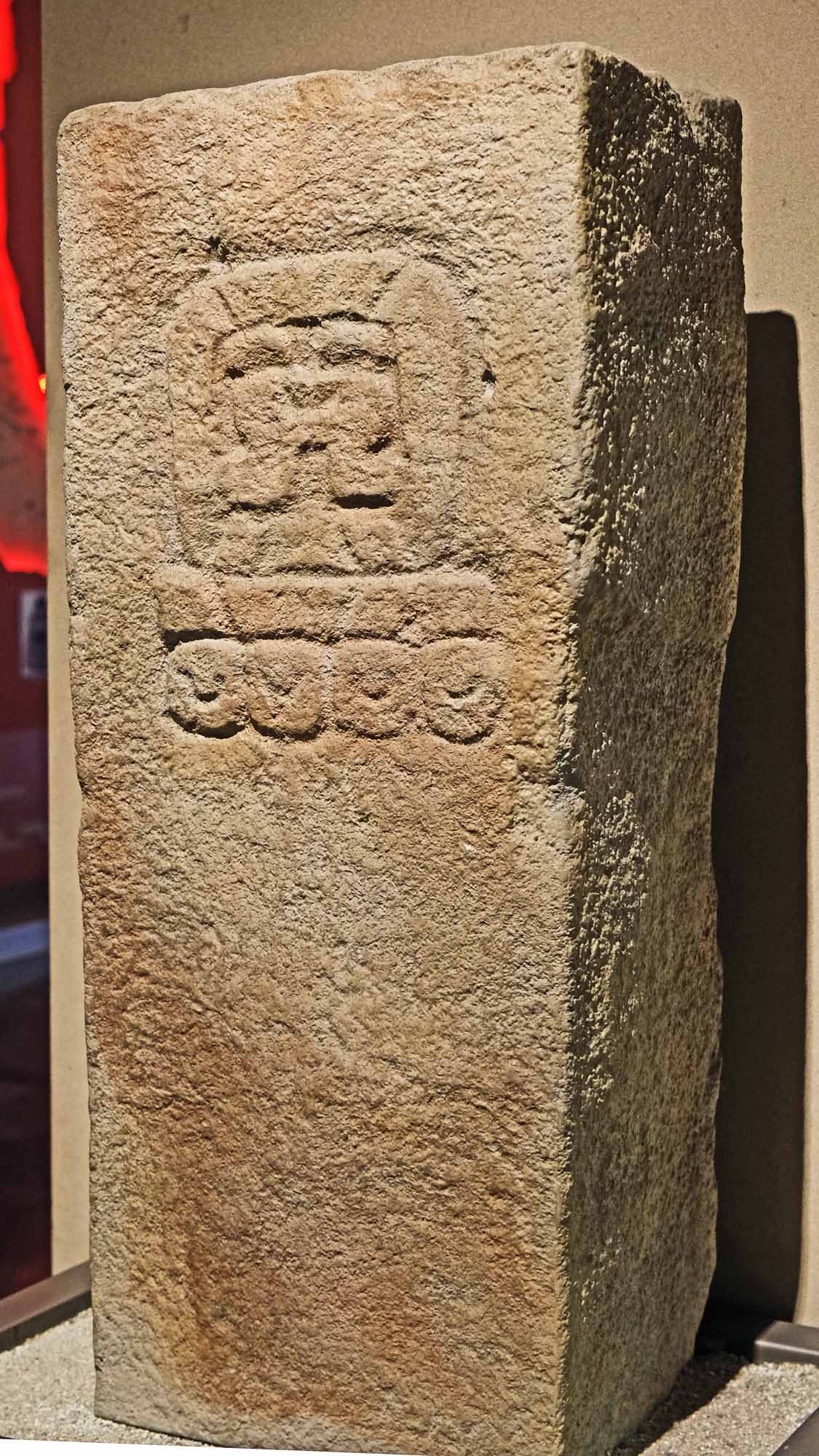
It was excavated from the entrance to one of the buildings. Its date is unknown. One theory is that the Oaxaca Barrio was contracted to carry out part of the demolition and destruction of the Feathered Serpent Pyramid right after 378 AD, and took this stone that was scheduled to be discarded and carved the date in Zapotec characters on it. The reason for this theory is that the overall shape of the stone is very similar to that which remains in the Feathered Serpent Pyramid.
In Oaxaca neighborhood apartment complex, the main residents were likely buried in the basements of their rooms. An urn (450 AD-550 AD) bearing the design of the Zapotec Basin god Coxijo has been excavated. The clay refers to the Oaxaca Basin.
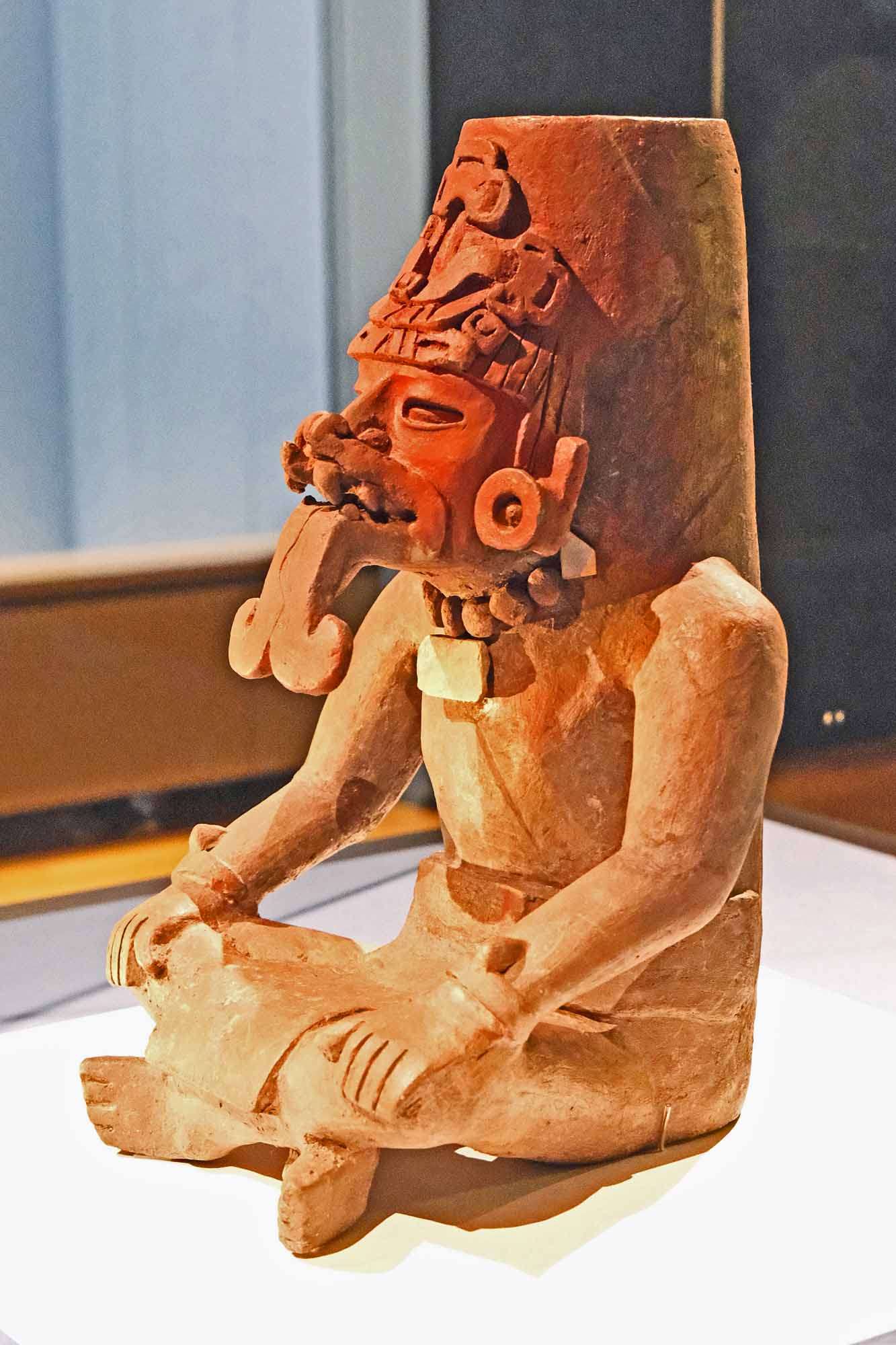
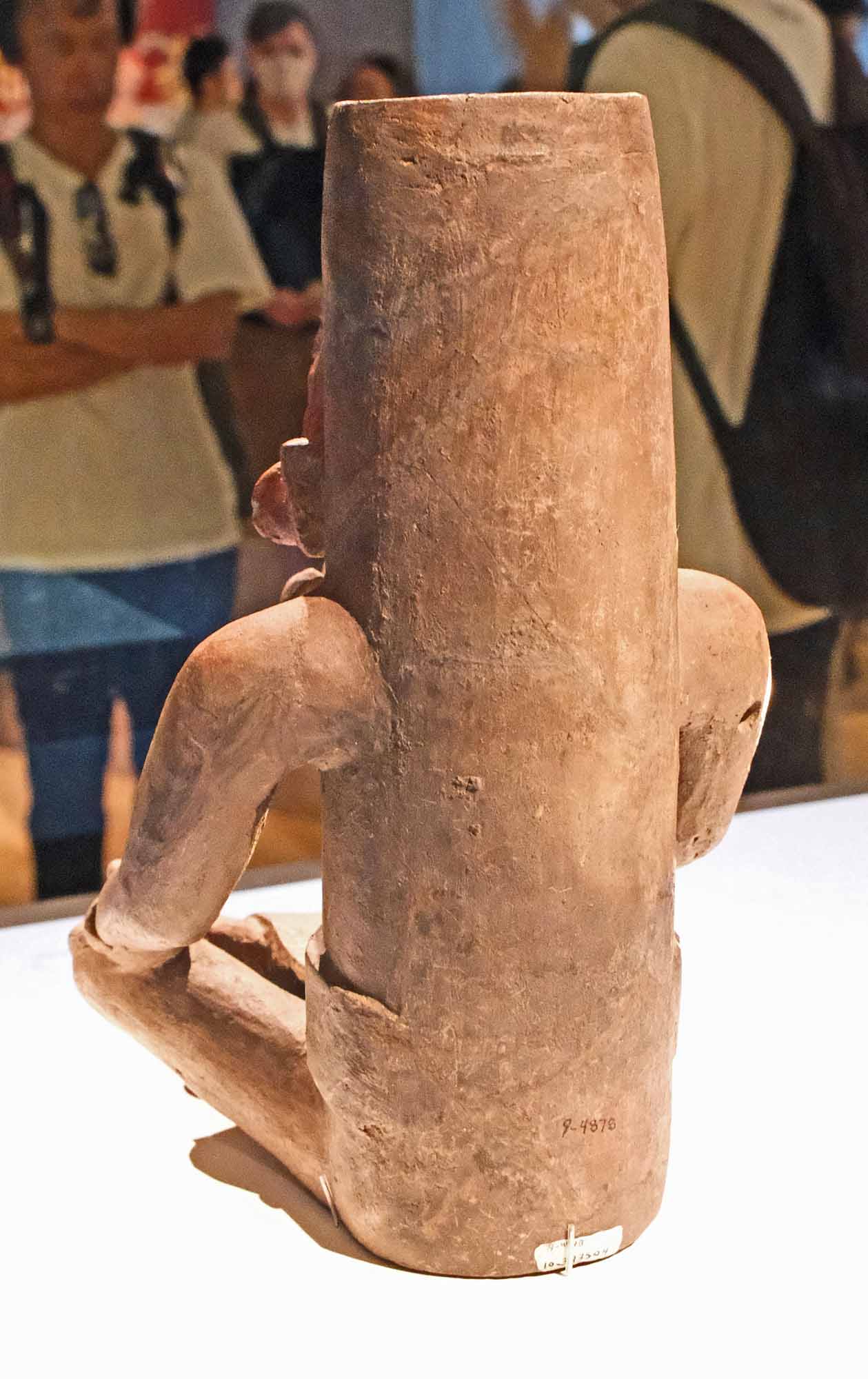
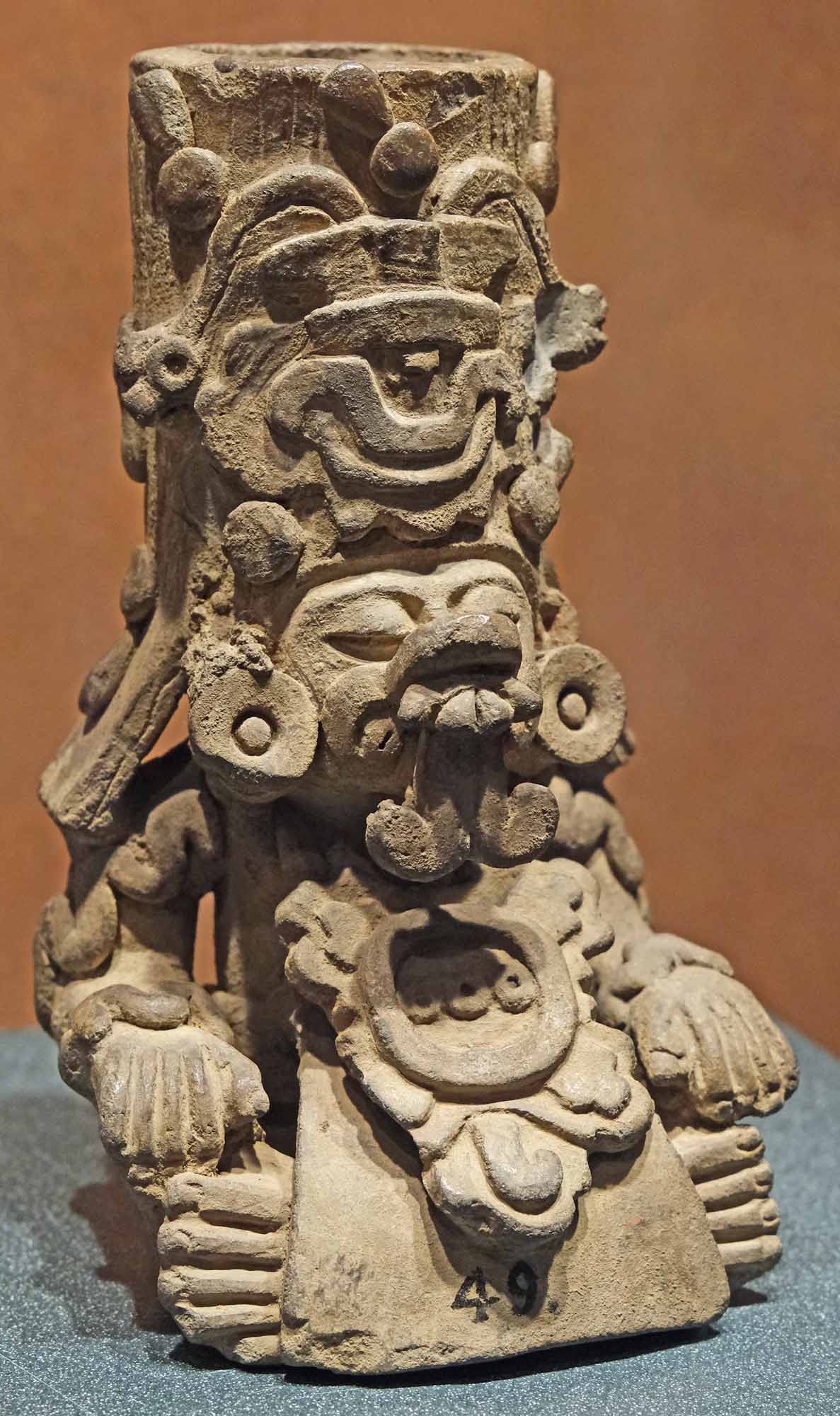
↑↑↑at Museum of Anthropology.
There are stairs leading to the cemetery below the courtyard. There are also cases where children born in the Oaxaca Barrio returned to the Oaxaca Valley to learn the language and culture, then returned here and died as adults. The grave goods of the female corpses were of higher quality, suggesting that this was a female-dominated society.
"Lady of Tlailotlacan"
Tomb 13 was found beneath the floor of Room 2 of TL6. 19 ceramic items were found as grave goods. A woman in her late 30s, dating to 570 AD-660 AD. Her cranial deformation is rare in Teotihuacan. Two upper front teeth were inlaid with pyrite discs (typical of the Maya). A jade inlay was found in the lower front tooth (typical of the Oaxaca Basin). Note that jade imports to Teotihuacan had drastically decreased in 400 AD. The dental tartar contained traces of a variety of food. It is speculated that the "Lady of Tlailotlacan" had lived in several places in Mesoamerica, likely linking her to the Teotihuacan elite. Such a person was buried in the Oaxaca barrio.
Now let's jump 400 km southeast to the Oaxaca Valley. The map below shows the area associated with two neighborhoods: Oaxaca Barrio and its neighbor to the north, Michoacán.
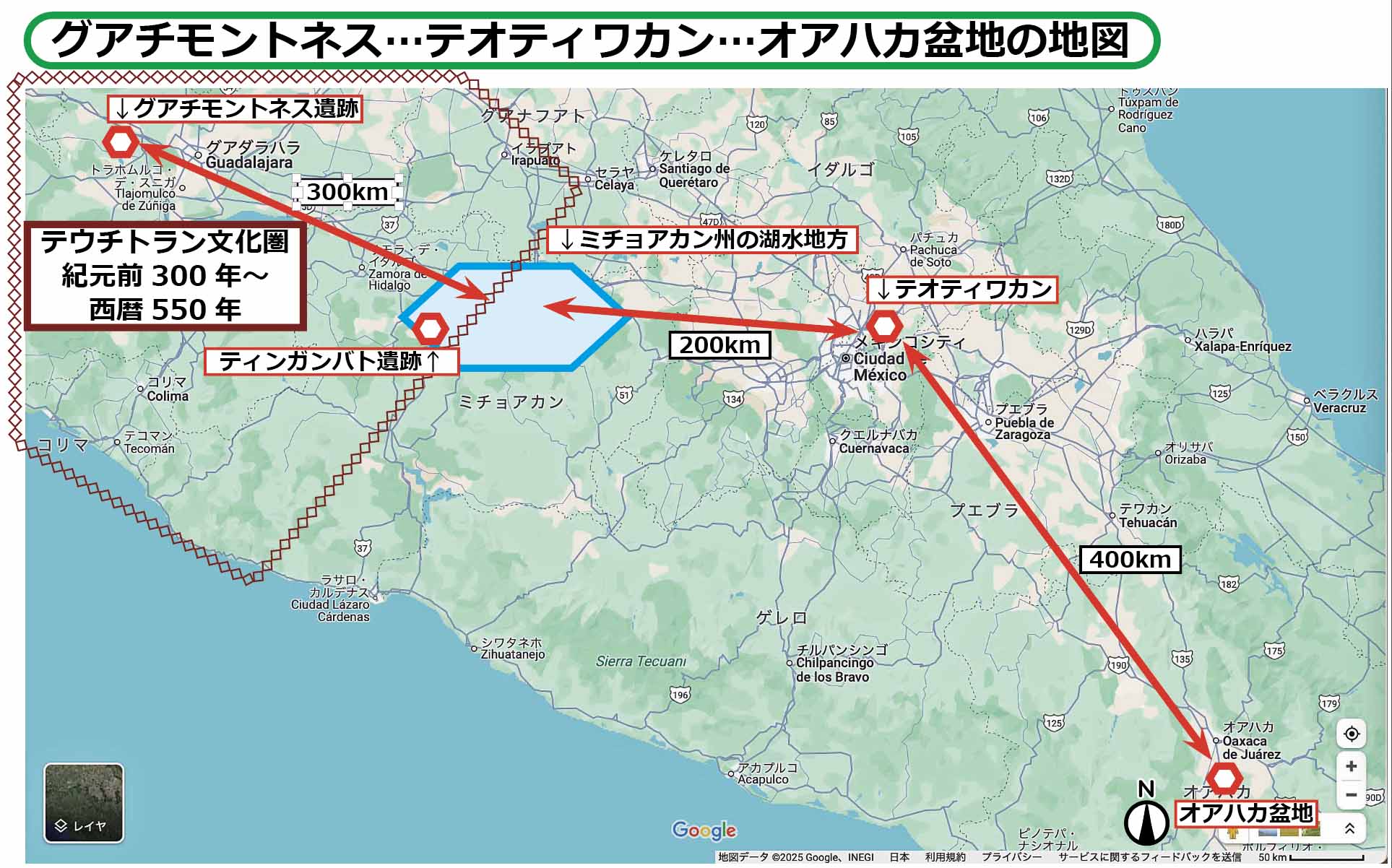
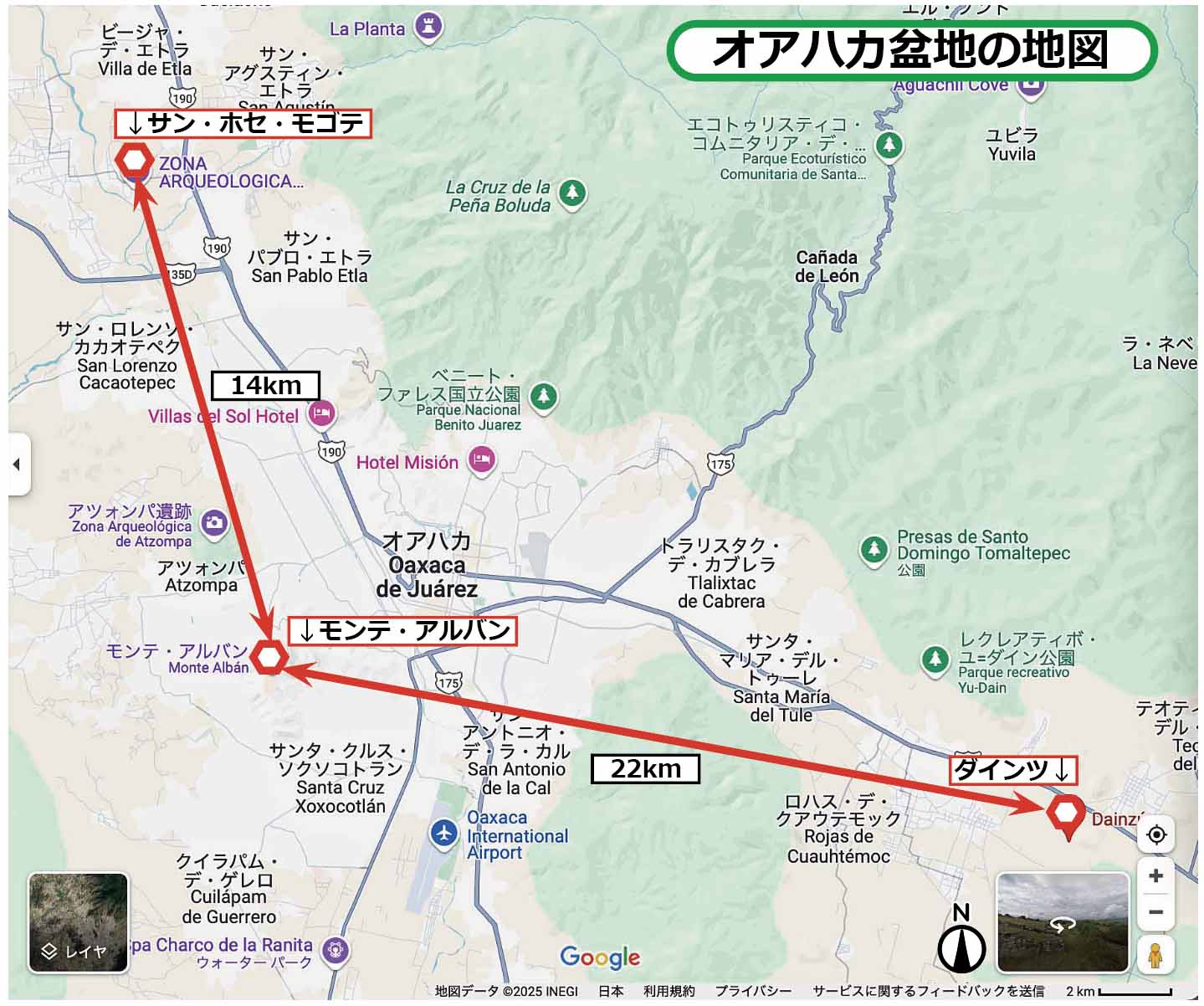
↑↑on Google Map。
We will touch on the history of the entire Oaxaca Valley.
The Oaxaca Basin is surrounded by high mountains, and although there are some hills within the basin, there is also a vast plain. In many areas, the groundwater table is only a few meters, making irrigation possible from shallow wells. Sedentary agriculture has been widespread there for thousands of years. However, because each farming village is located on flat land, there have been frequent attacks from outside farming villages and bandits.
The plateau where Monte Alban now stands is thought to have been almost deserted due to the lack of water, until someone brought a culture there and built a structure in 500 BC.
Oaxaca Basin...Part 1...San José Mogote
There are traces of agriculture in San José Mogote dating back to 1,500 BC. In 1,000 BC, the estimated population was 700 people. In 700 BC, the entire Oaxaca Valley had an estimated population of 2,000 people, making this the most powerful region.
Construction of Mound 1, a substantial platform, began in 650 BC. The architectural axis is tilted 8 degrees south to west, the same as the Olmec La Venta ruins.
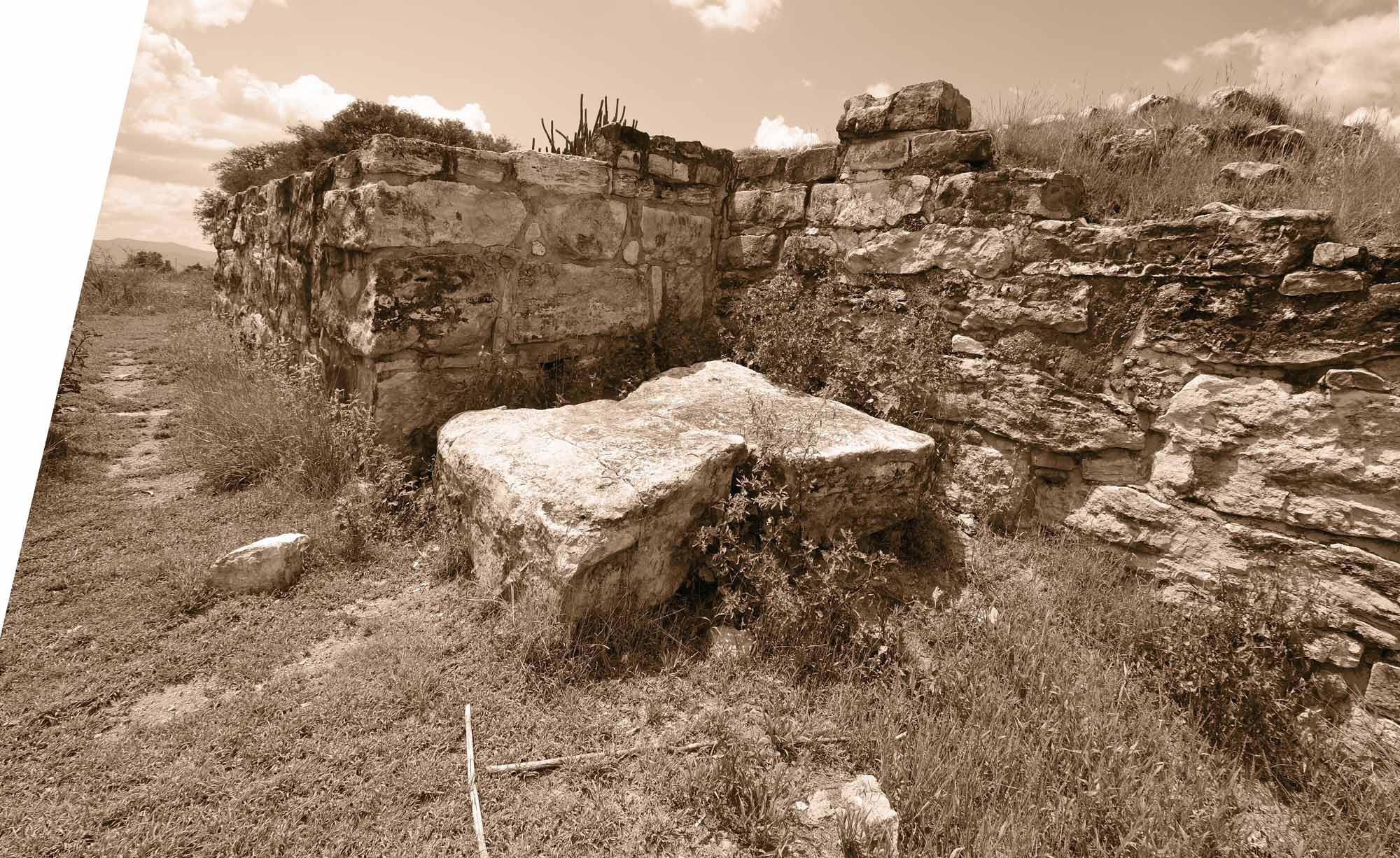
↑at San Jose Mogote.
In the northeast corner of Mound 1, just to the left of the white Altar 1 in the center of the photo, a layer of charcoal dating to 720 BC was laid. Monument 3 was placed flat on top of it. The bas-relief depicts a figure with closed eyes, an open mouth, two large drops of blood, three cross-sections of blood vessels where the heart had been removed, and his Zapotec calendar name. He was likely a prisoner of war.
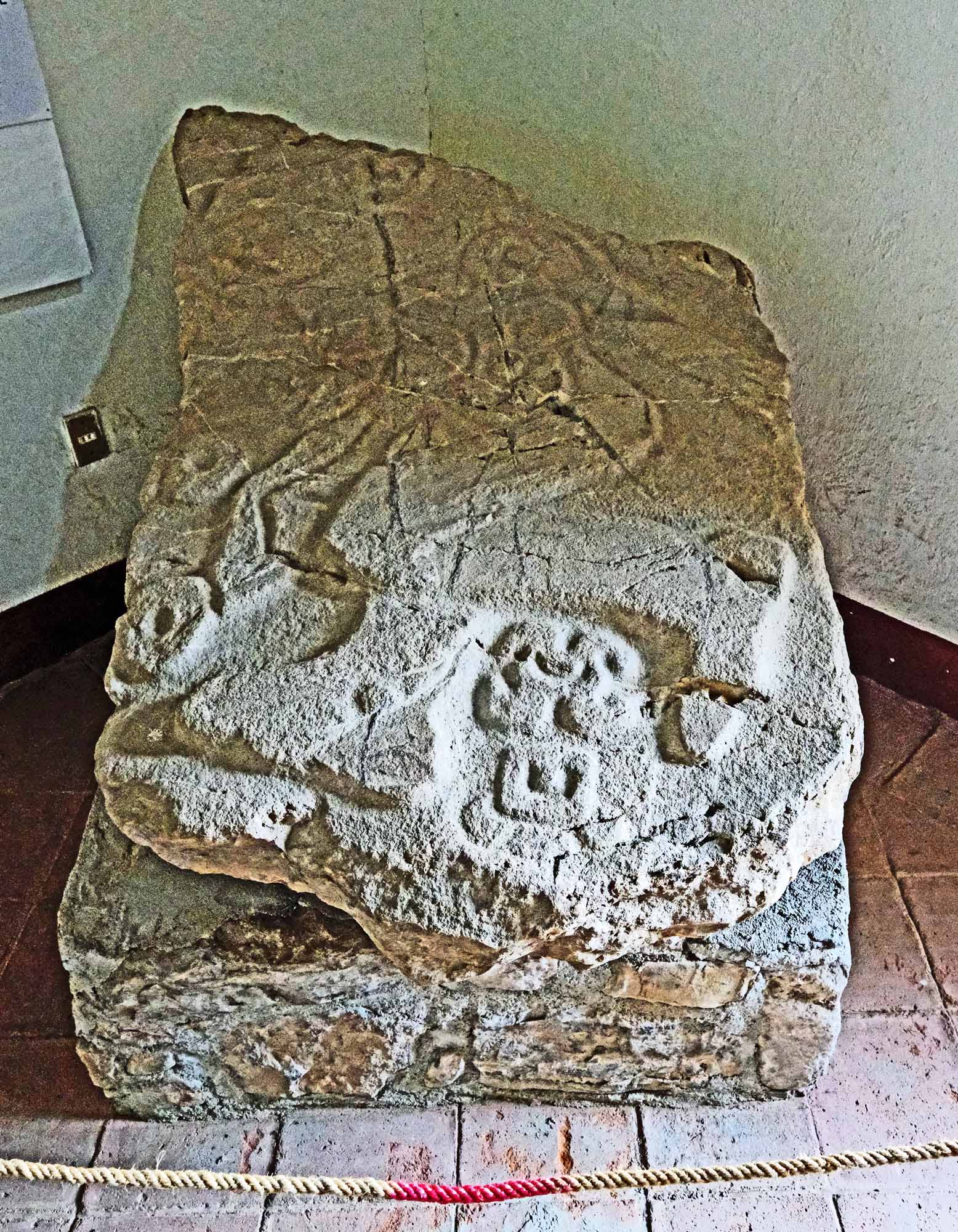
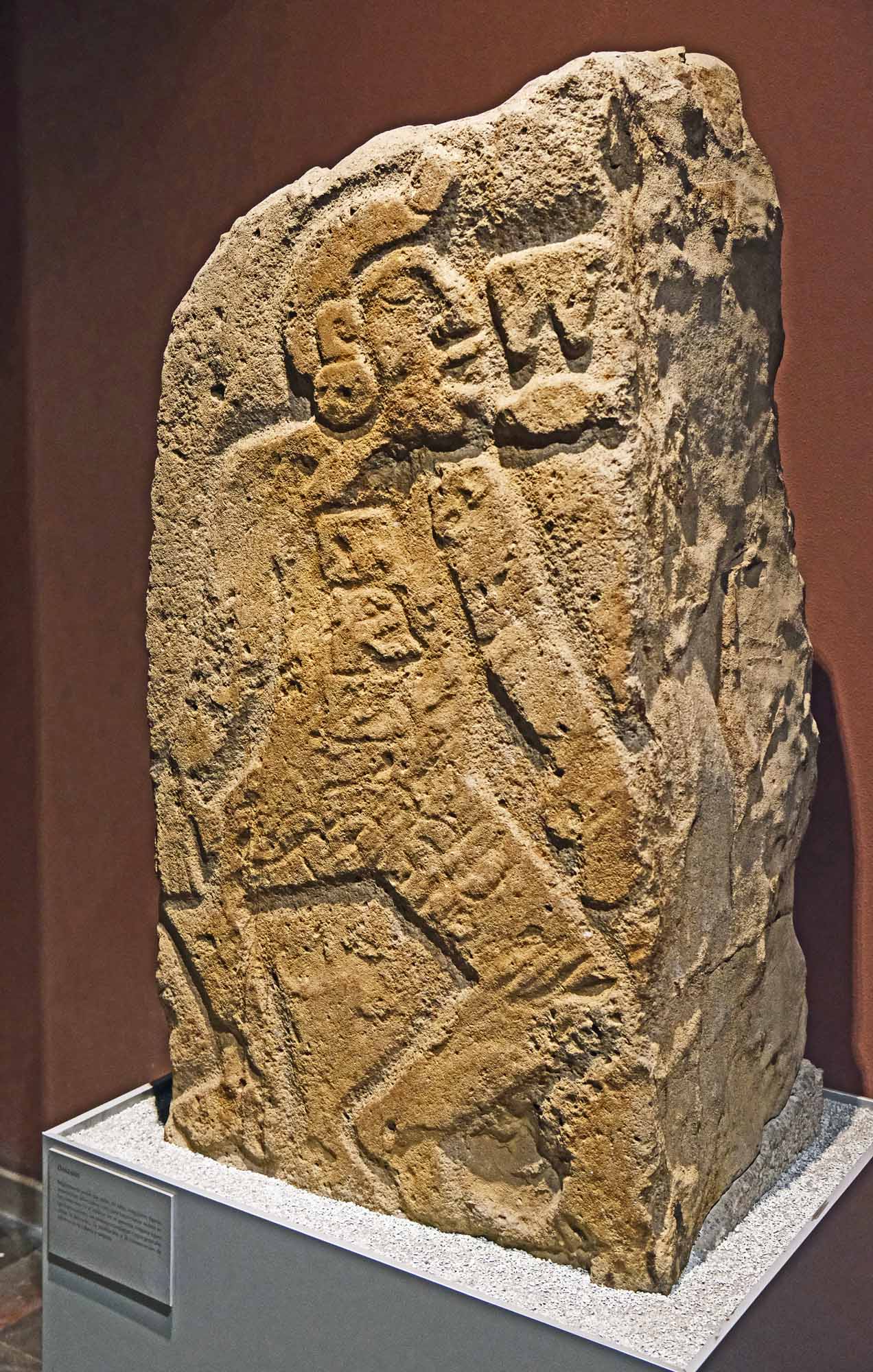
↑Monument 3...at San José Mogote Museum. ↑Dancing Man in Monte Albán at the Museum of Anthropology.
The composition and the bas-relief style are very similar.
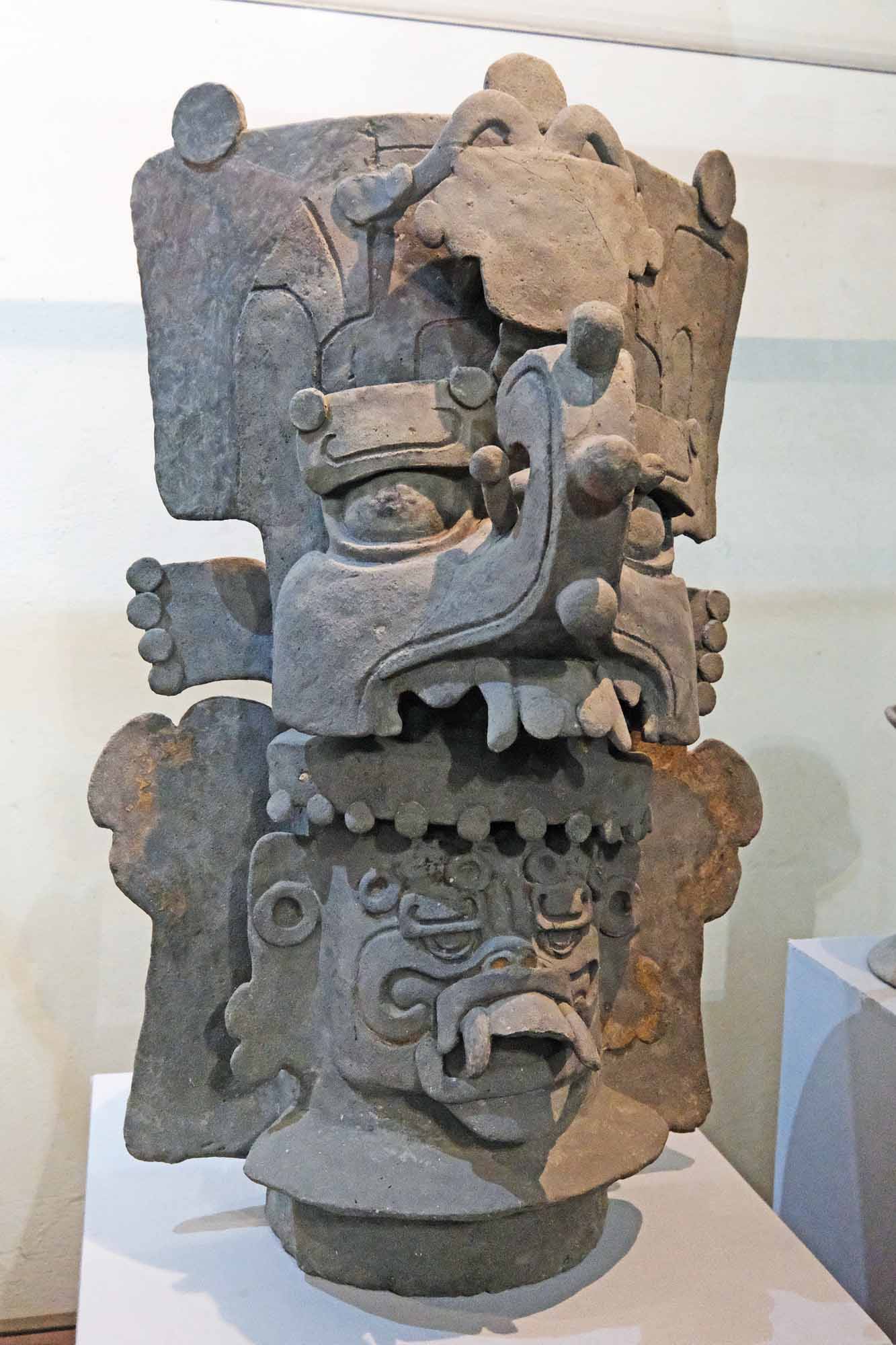
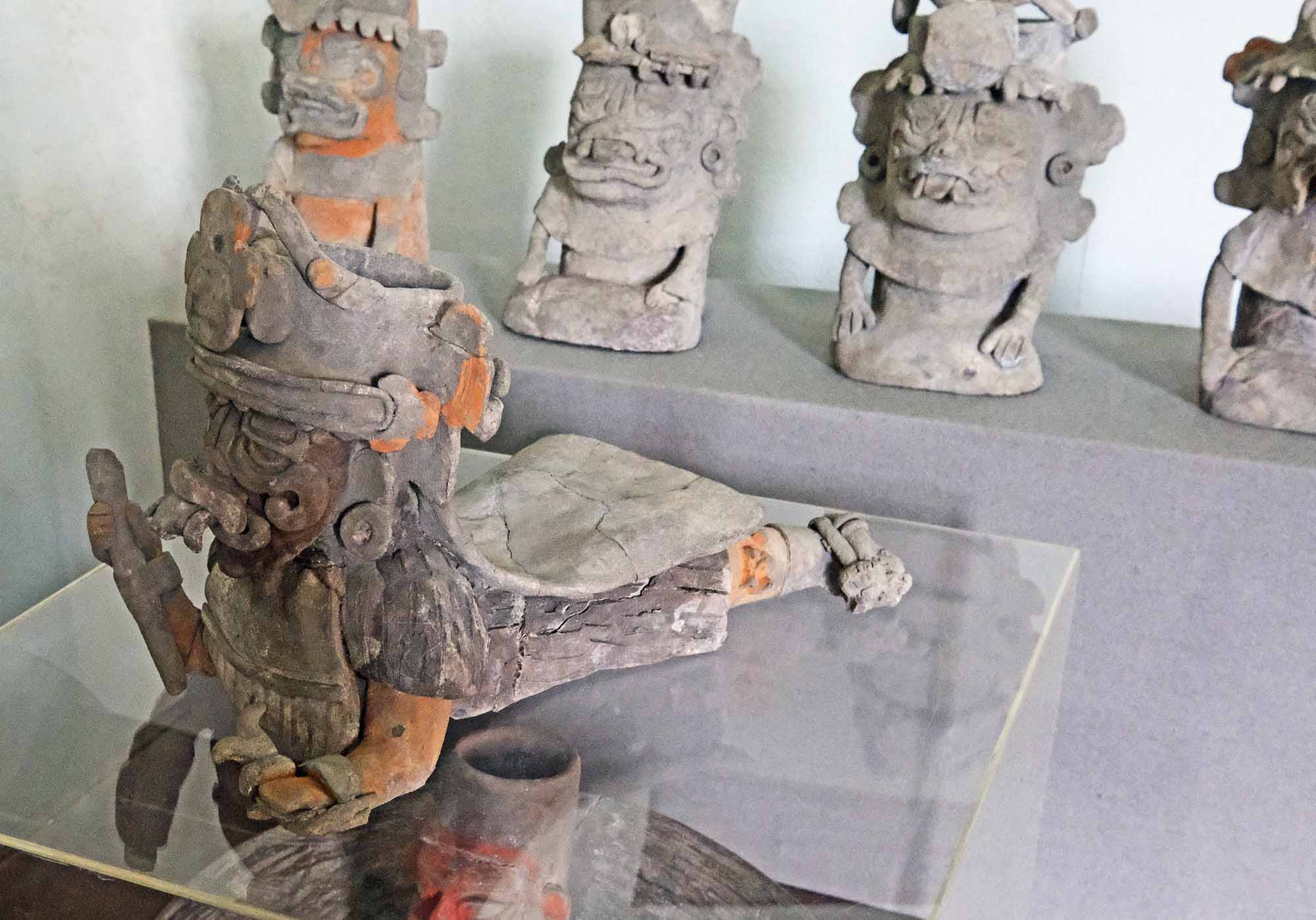
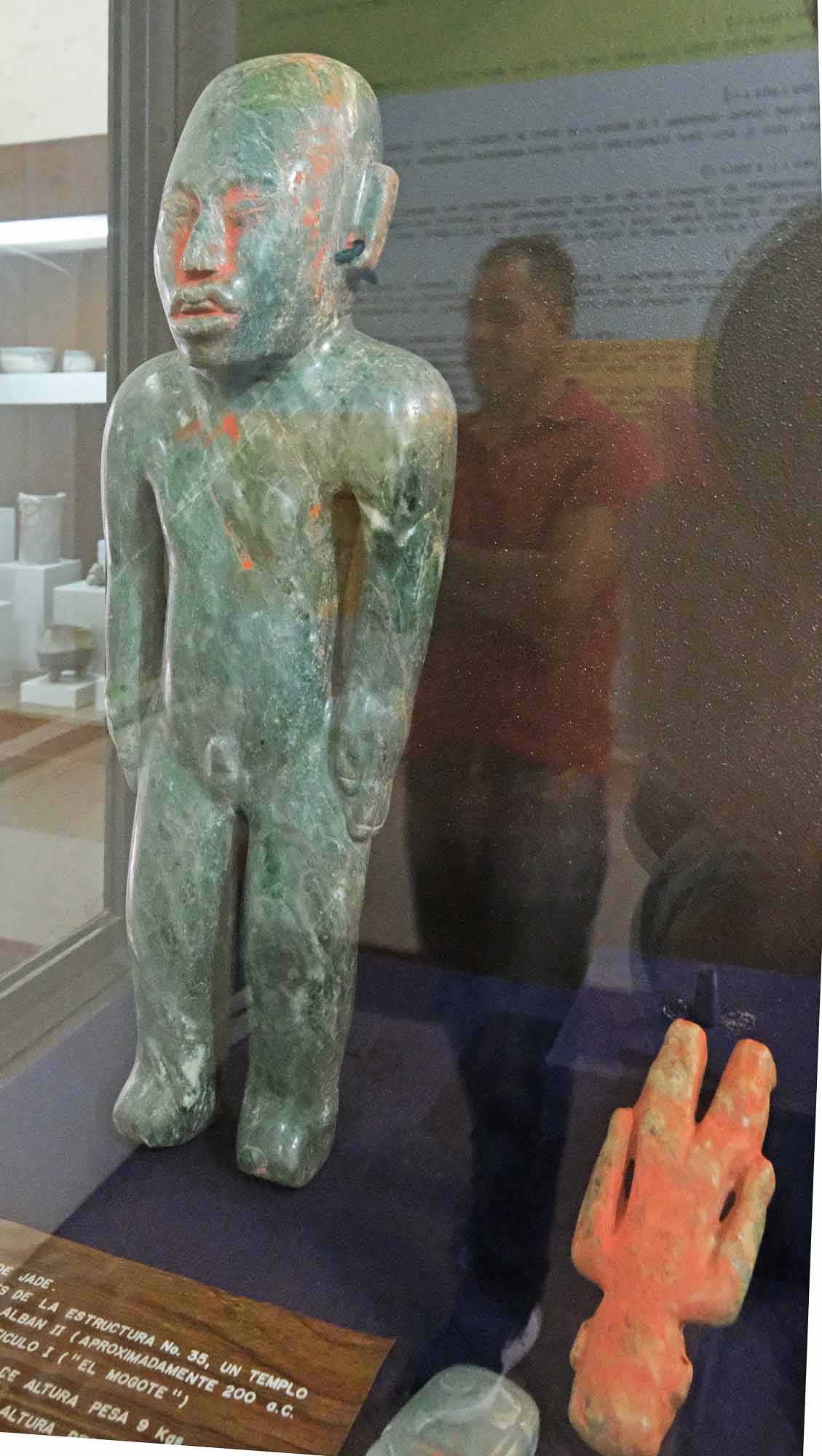
↑↑↑at San Jose Mogote Museum.
Also unearthed were urns that looked identical to those from the Oaxaca Barrio, as well as greenstone figurines from the Olmec culture.
Although they had great power, two layers of carbonized material, thought to have been burned, remain beneath the ground where they lived. They were probably not invincible in the Oaxaca Basin.
In 500 BC, Mound 1 already housed a twice-renewed colonnaded temple, but its leaders decided it was time to move it, along with the commoners, to a more defensible location.
They probably reached an agreement with a friendly neighboring agricultural settlement and moved there en masse in 500 BC, knowing the disadvantages of having no river and having to dig deep wells or carry water up from the plains, but emphasizing the advantages of being surrounded by steep cliffs 300 meters above the plain. The migration was successful, and the Monte Alban ruins were established. With strong offensive and defensive capabilities, they quickly gained control of much of the basin.
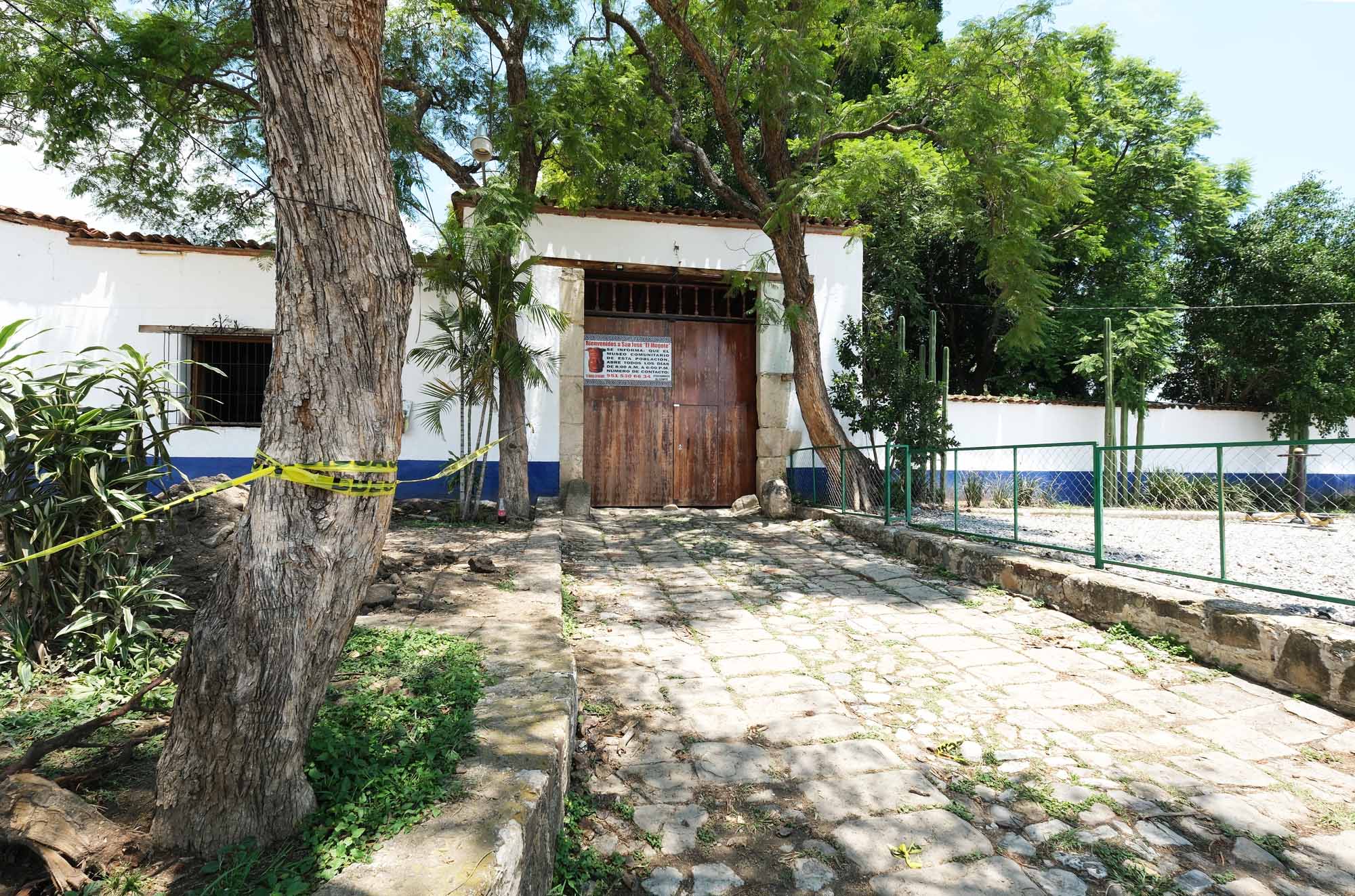
The San Jose Mogote Museum is not located within the ruins. To begin with, there is no caretaker at the ruins. There's a phone number painted on the gate. If you're lucky, a neighbor will come to unlock the door for you in about 15 minutes.
Oaxaca Basin...Part 2... Monte Alban
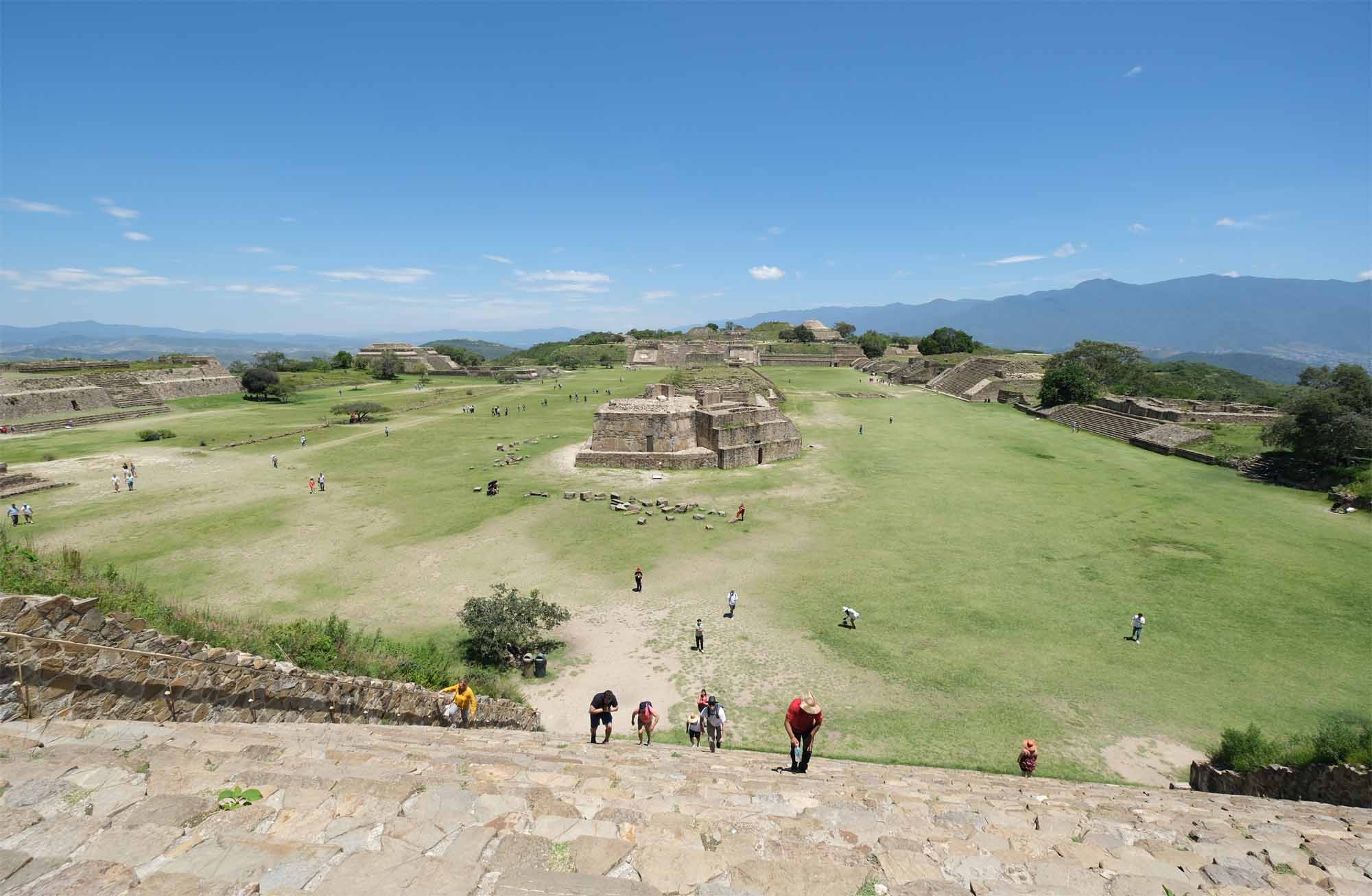
↑at Monte Alban.
The Monte Alban construction project was successful and appears to have mitigated threats from surrounding villages. Around 1 AD, the Monte Alban government recalled their nearly deserted 500-year-old homeland, San José Mogote, and began renovating it as a secondary center.
A new Mound 1 (South Temple) will be built over the old Mound 1, a plaza extending from there to the North Temple, temples on both the east and west sides, and an ball court on the west side. Looking at the layout in the paper, it looks like a mini Monte Alban. The photo below shows the west side of the South Temple, with the central staircase visible on the left.
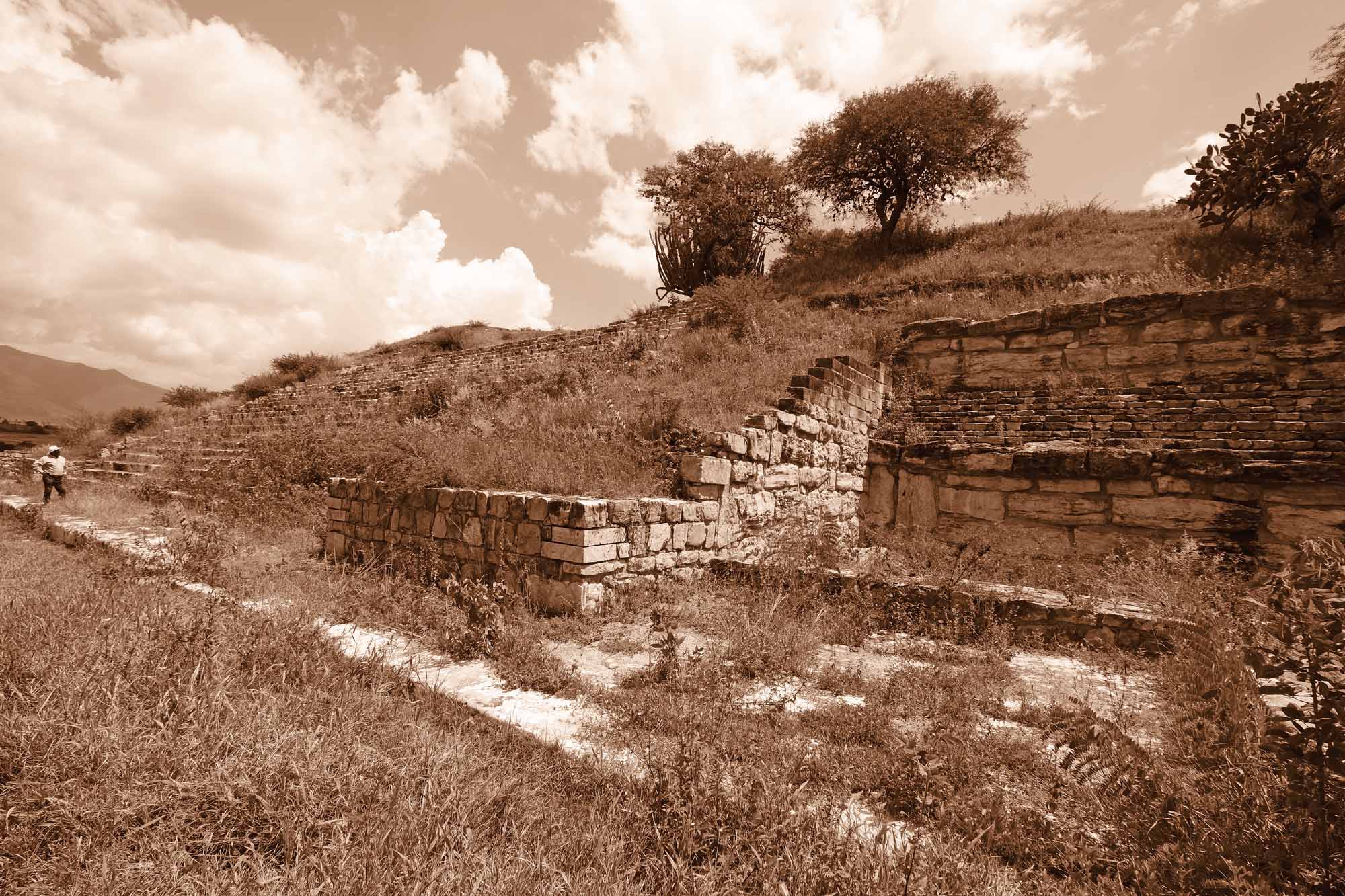
↑at San Jose Mogote.
Monte Alban's development seems to have been achieved by initiating and winning battles. This is evident not only in the Temple of the Dancing Men, a building constructed as a relief to show the treatment of prisoners of war, as seen in the San José Mogote section, but also on the exterior wall of the Observatory.
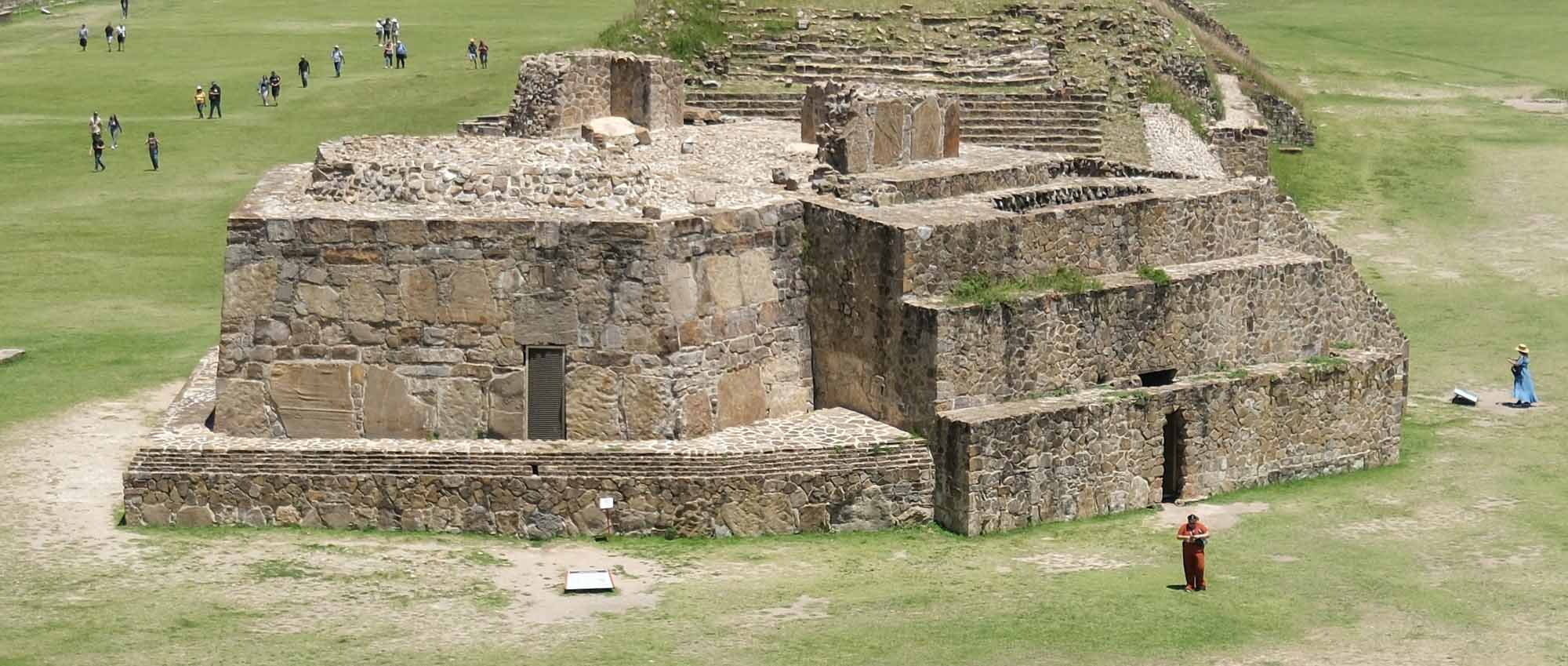
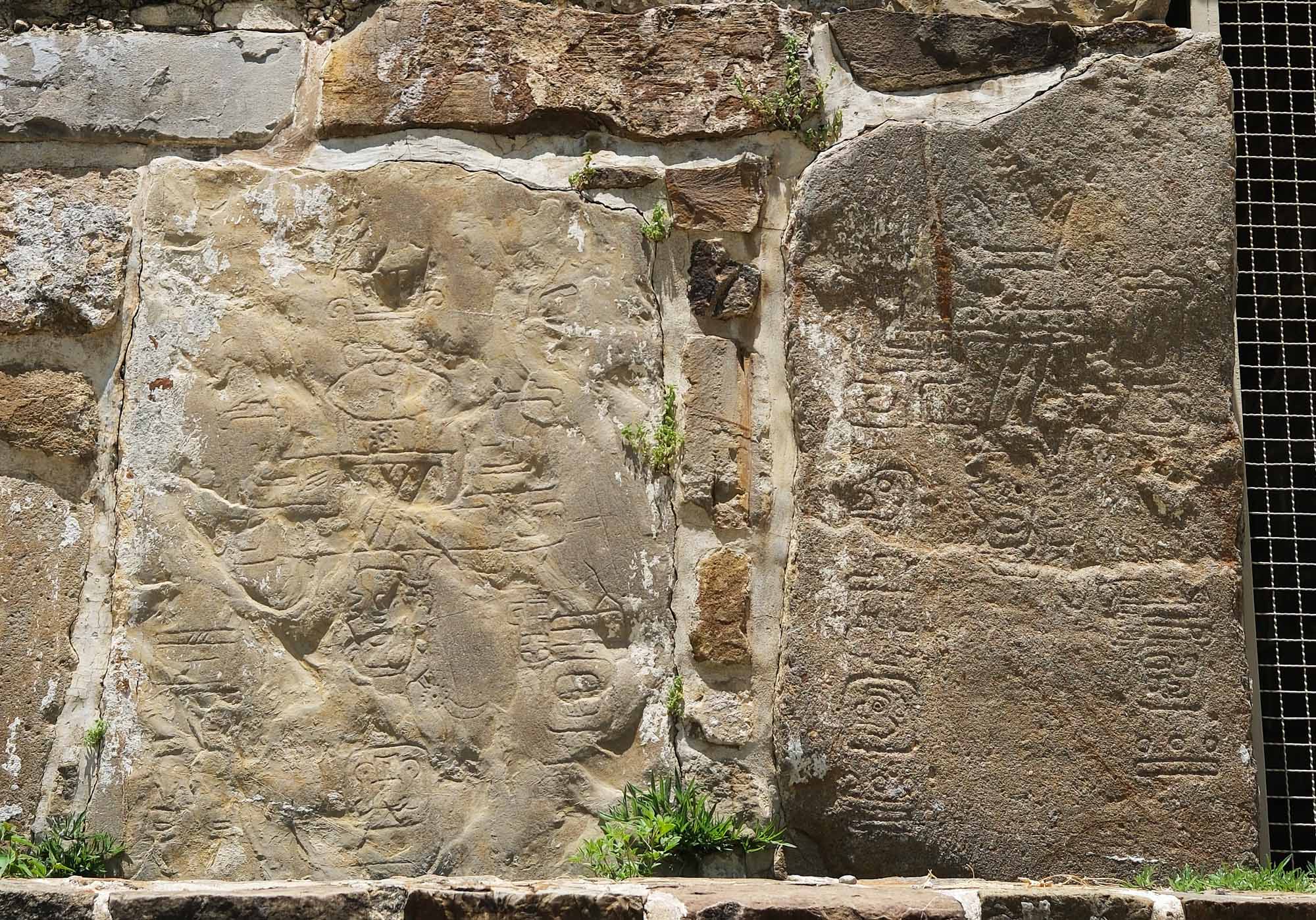
There are many records of the conquests from 100 BC to 200 AD, carved in Zapotec characters.
The estimated population under Monte Alban's rule in 350 AD was 115,000. Anyone can imagine how such a large population could live in the area shown in the photo above. However, by that time, they had laid out pathways across the cliff faces of the highlands, built hundreds of houses, and distributed farmers throughout the vast Oaxaca Valley. The urban population of Teotihuacan at the same time was 120,000, so this is roughly the same.
The path down to the cliff face is not open to tourists, probably because each dwelling has its own underground tomb, and they want to reduce the chances of grave robbers.
There are four interesting ruins/artifacts at Monte Alban.
1...Lisa Stone Monument (= Stone Monument 7)
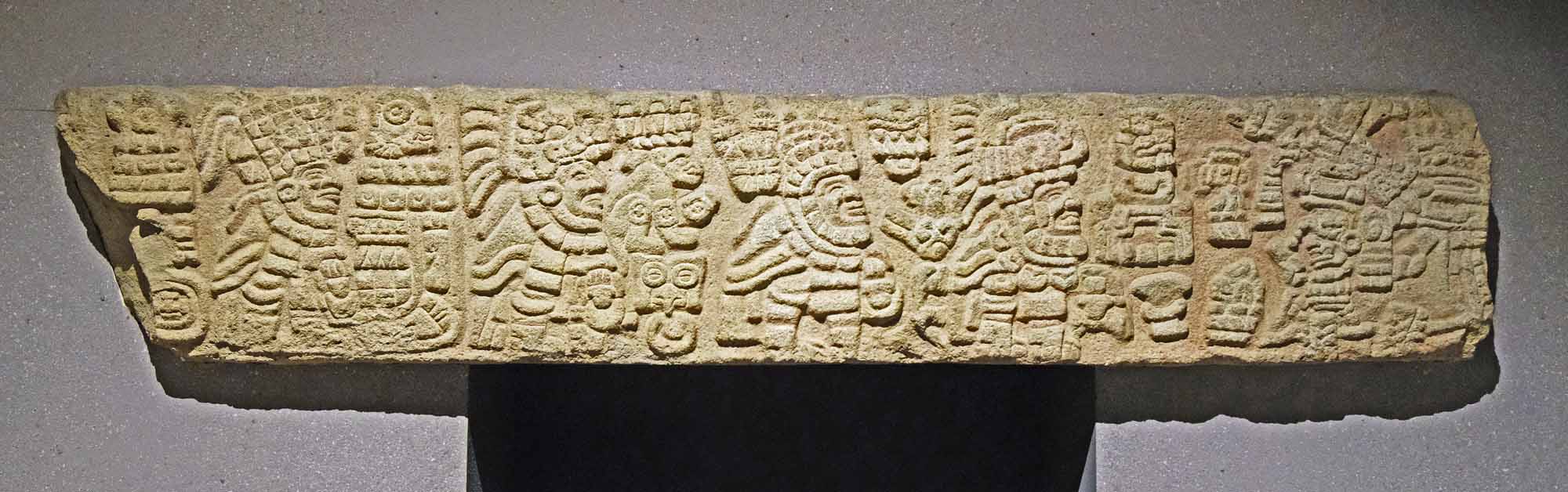
↑at Museum of Anthropology.
The common belief is that "the king of Monte Albán, dressed in Zapotec attire on the far right, is receiving a courtesy visit from four people dressed in Teotihuacan attire."
Incidentally, it is said that the stone was unearthed on the west face of the southern platform, but perhaps it just rolled there. The shape of the stone monument is oblong, making it a perfect fit for the lintel (= door upper frame) above the entrance to a stone building, but no trace of that stone building has been reported. The Anthropological Museum also explains that it was "manufactured between 550 AD and 800 AD." If that's the case, then what was the purpose of the four elite members of Teotihuacan, whose power was already weakened by 550 AD, traveling 400 km? An explanation would be appreciated.
2...Bazan Gravestone
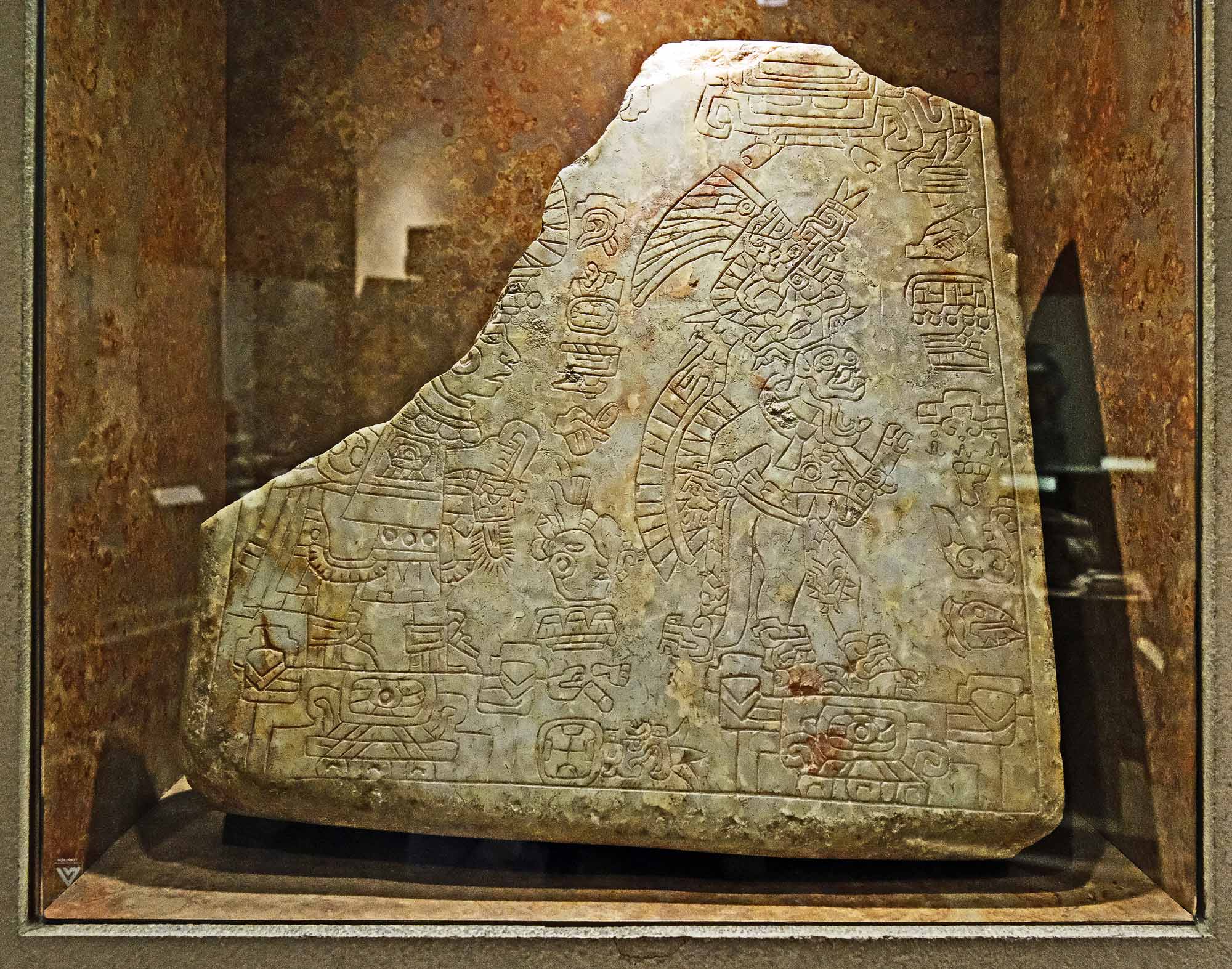
↑at Museum of Anthropology.
It is believed to have been made between 200 AD and 500 AD and was excavated in Mound X (=Group M) at Monte Albán. It is an important stele because it is carved on a rare and large piece of selenite.
To the right of the jaguar costume is "3 Turquoise color," and to the left of the Teotihuacan-style costume is "8 Turquoise color." If this is a tombstone, perhaps it was made at the time of "3 Turquoise's" burial. Perhaps it was an important meeting during "3 Turquoise's" reign.
The Anthropological Museum explains that both men were kings. Archaeology has not confirmed the existence of kings in Teotihuacan between 200 AD and 500 AD. Perhaps the Zapotec language does not have a word for "government official/councillor," and visitors who had traveled 400 km may have treated him as such, even if he was not "King of Teotihuacan."
3...Stone monument 1
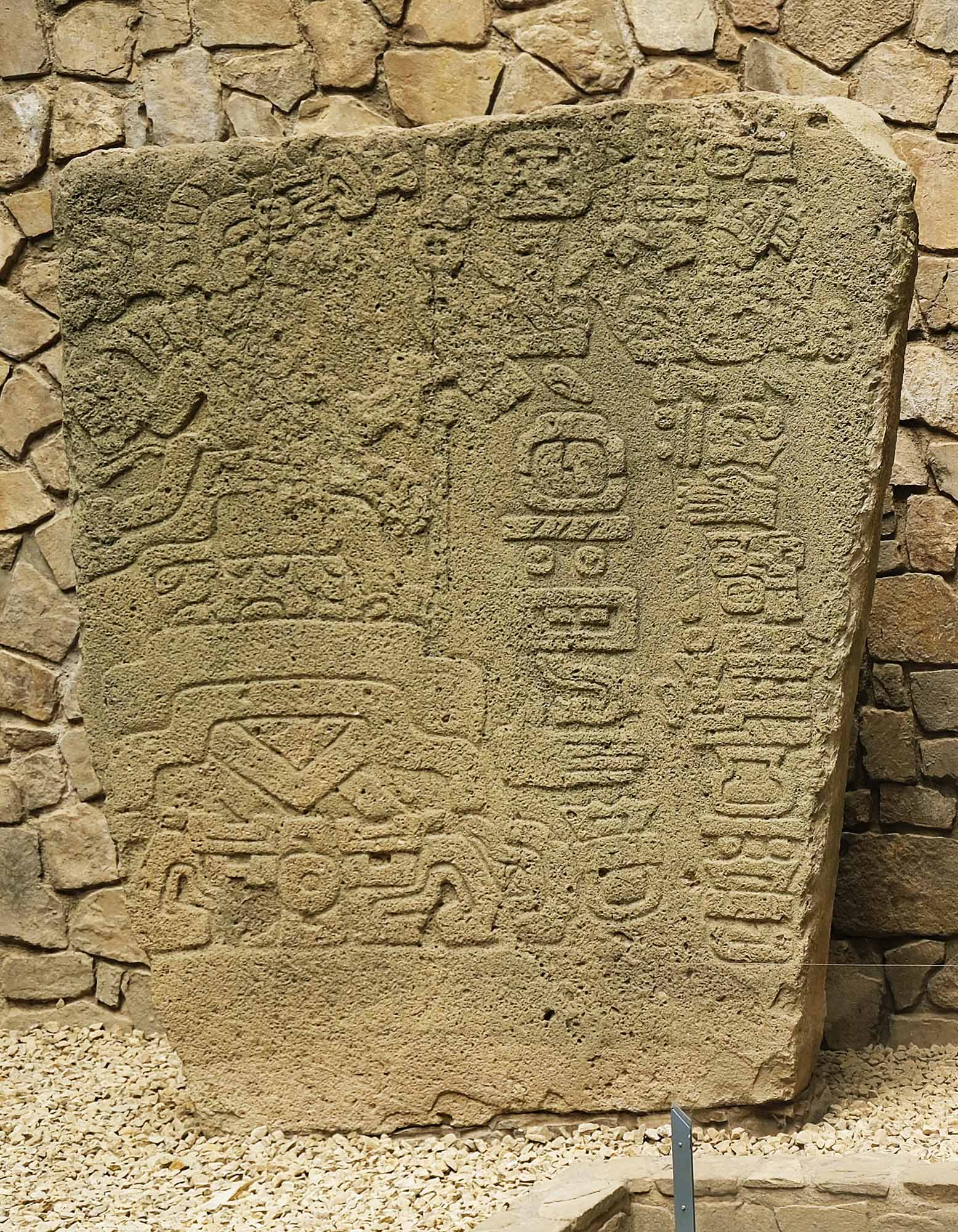
↑At Monte Alban Museum.
The year of production is unknown. The costume of the figure on the upper left is different from that of the figure on the far right of the Stela Lisa, but resembles the four figures on the Stela Lisa, so some say that it is Teotihuacan. However, the only figure carved on the stela is seated on a throne, and we await a translation of the Zapotec language to find out what it means that it is located in Monte Albán.
4...Jeweled Building
↑on Google Earth。
It is located on the east side of the northern platform and was built around 500 AD. The part closest to the ground resembles a tablero. This architectural style is not found in any other buildings in Monte Albán. Perhaps it was built to entertain guests from the region or to demonstrate the close ties with the region.
There is no evidence to refute the hypothesis that the above four factors occurred simultaneously in 500 AD. Furthermore, excluding the two individuals involved in 378 AD, "8 Turquoise color" is the only Teotihuacan whose name remains.
On the other hand, at least in the Oaxaca Barrio, it seems likely that the people continued their hometown customs in terms of funerals and burials, while in all other respects, food, clothing, and shelter, they followed the Teotihuacan concepts. However, the ritual items found in the luxurious tombs at Monte Albán have not been excavated in the Oaxaca Barrio. Therefore, it is considered unlikely that some of the elite migrated.
Now, if the inhabitants of the Oaxaca Barrio were not the elite of Monte Albán, then they were either commoners from there or people from other settlements in the Oaxaca Valley.Recently, a paper has hinted, based on strontium analysis, that it may be the Daintu site.
Oaxaca Basin...Part 3...Dainzu
Settlement began around 700 BC and the town developed into a central city in the area. However, around 200 BC, the more powerful Monte Alban ordered the people to move there. The population dropped significantly, but the inhabitants were soon relocated. Monte Alban probably found it more advantageous to let the town function as a secondary center. The town continued to grow until 1200 AD.
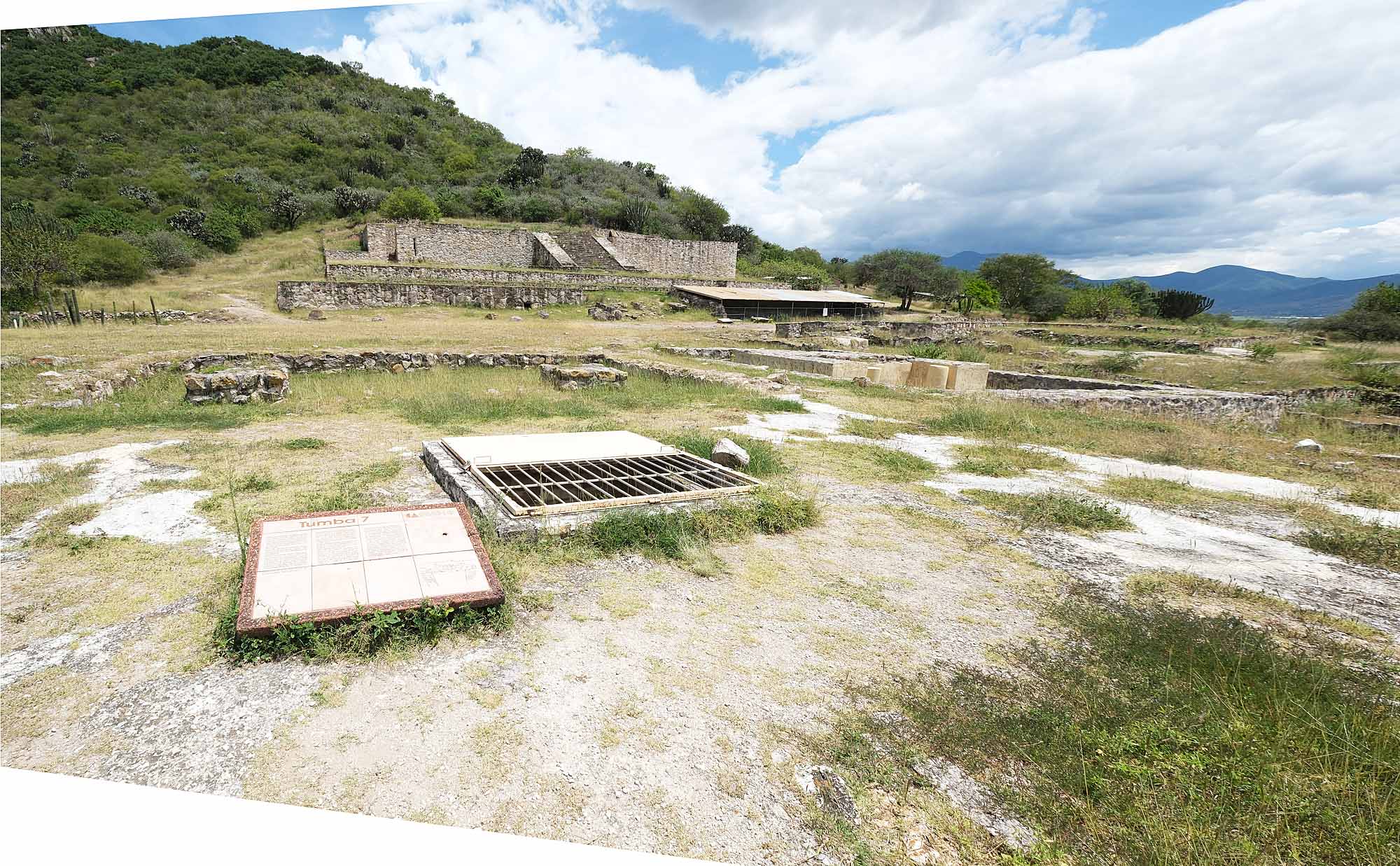
↑at Dainzu.
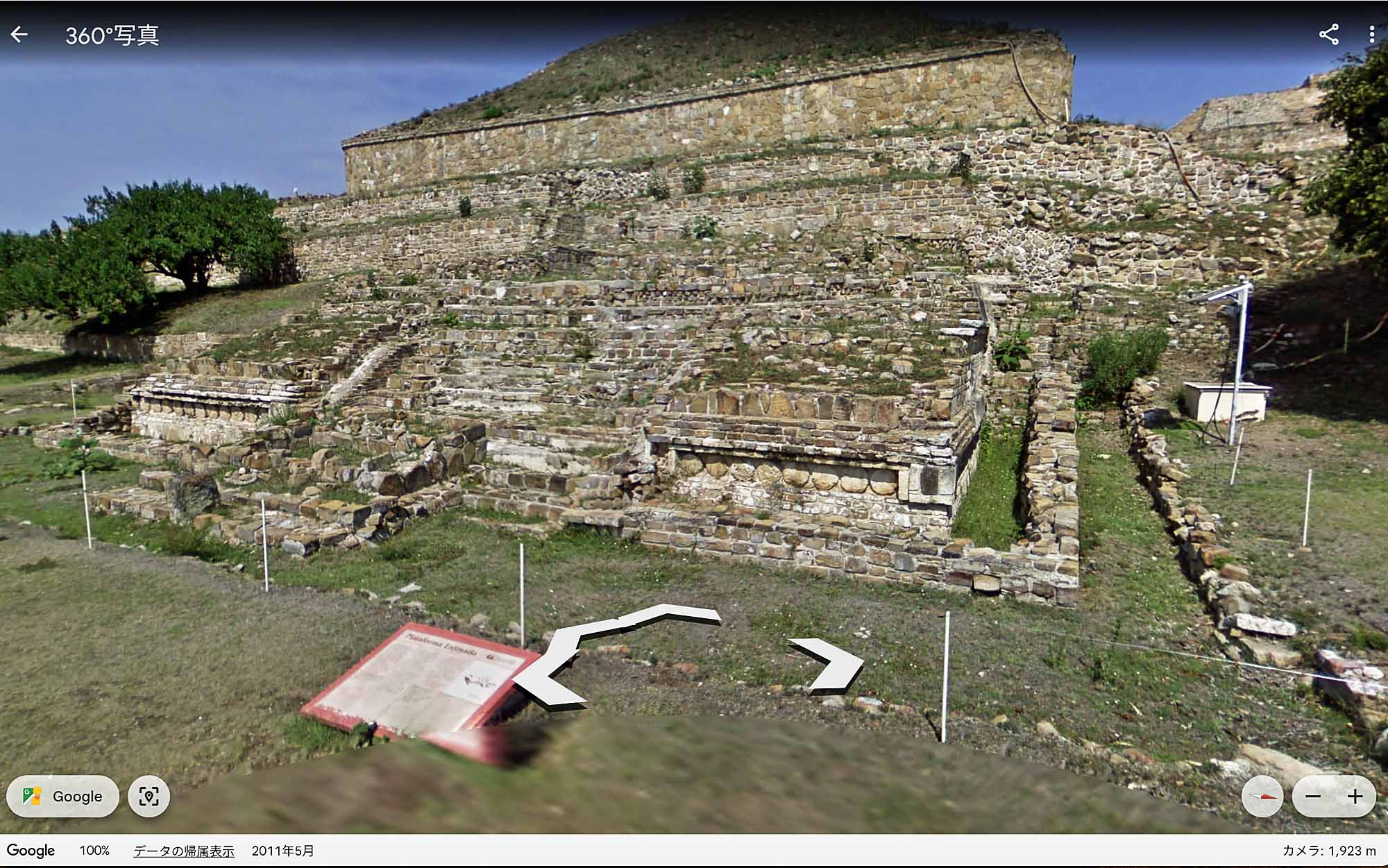
The large building in the back is Building A, and the "Relief Wall" is on display under the roof at the bottom right. In front of that is the "Yellow Temple," and to the left is "Tomb Chamber 7."
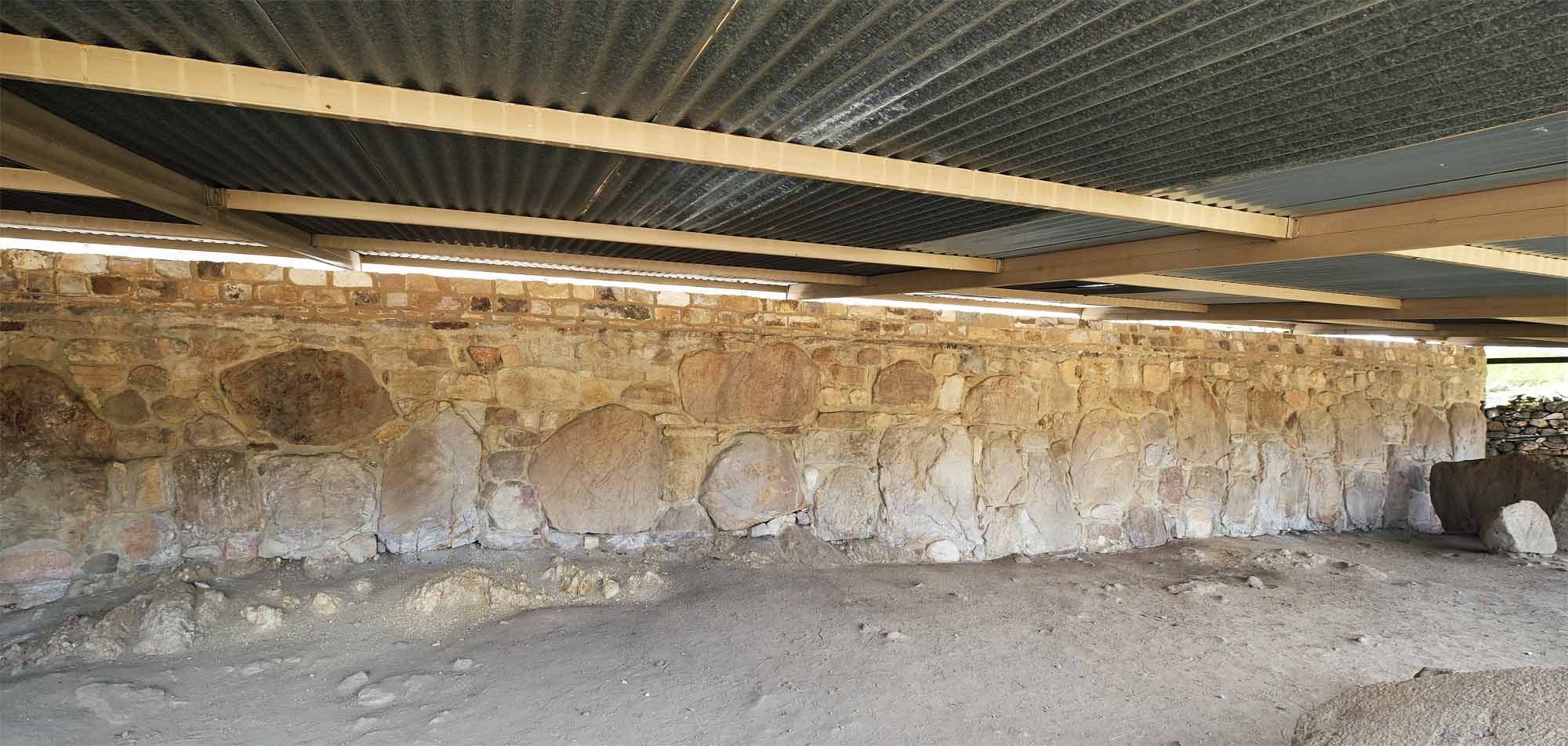
The "Relief Wall" is inlaid with many fragments of reliefs. Our local guide explained that archaeologists had collected these fragments that were scattered throughout the ruins to create this wall.
Well, I suppose they couldn't have left it exposed, but I was worried that it might give the wrong impression that such a wall existed at the time.
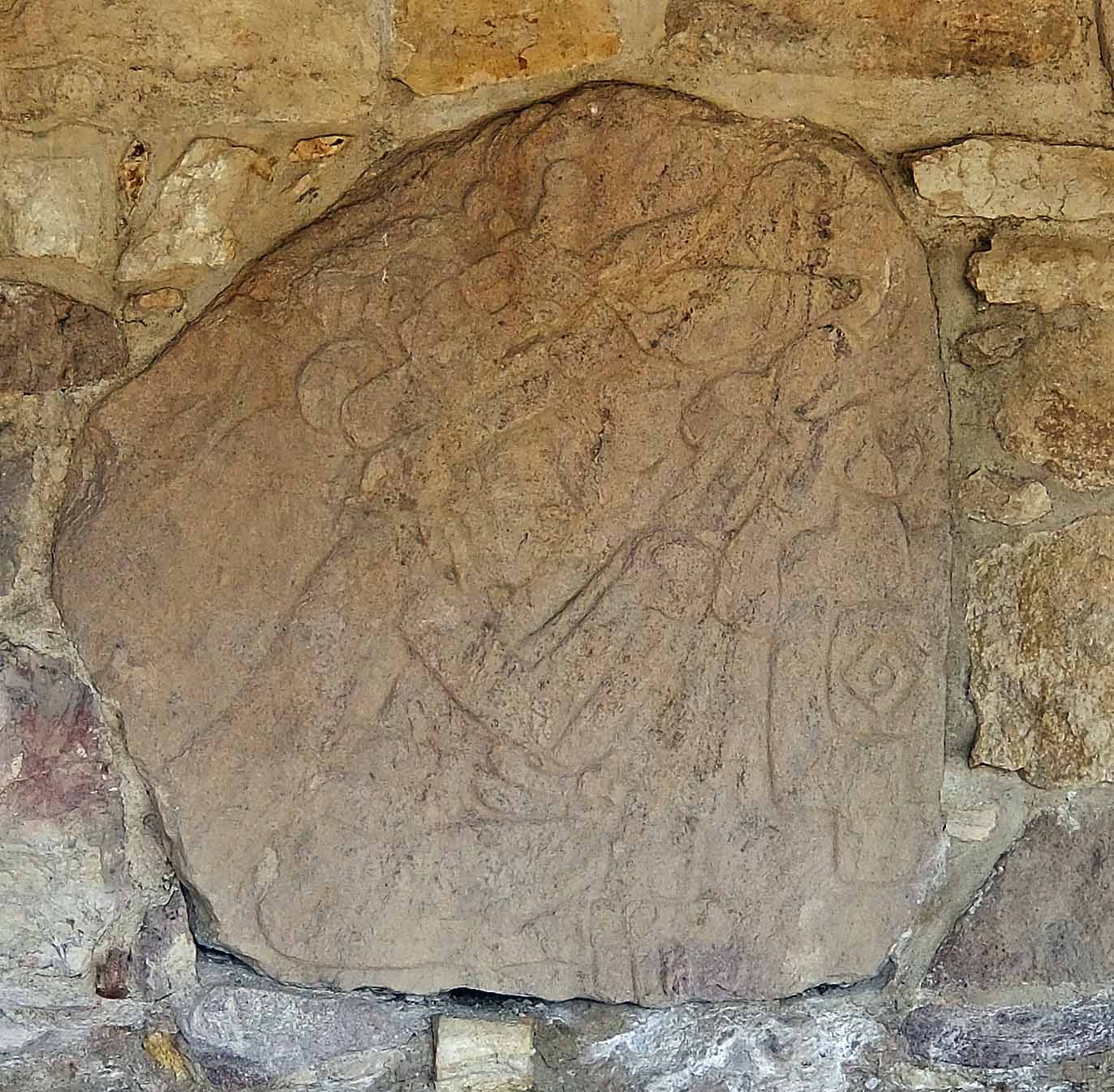
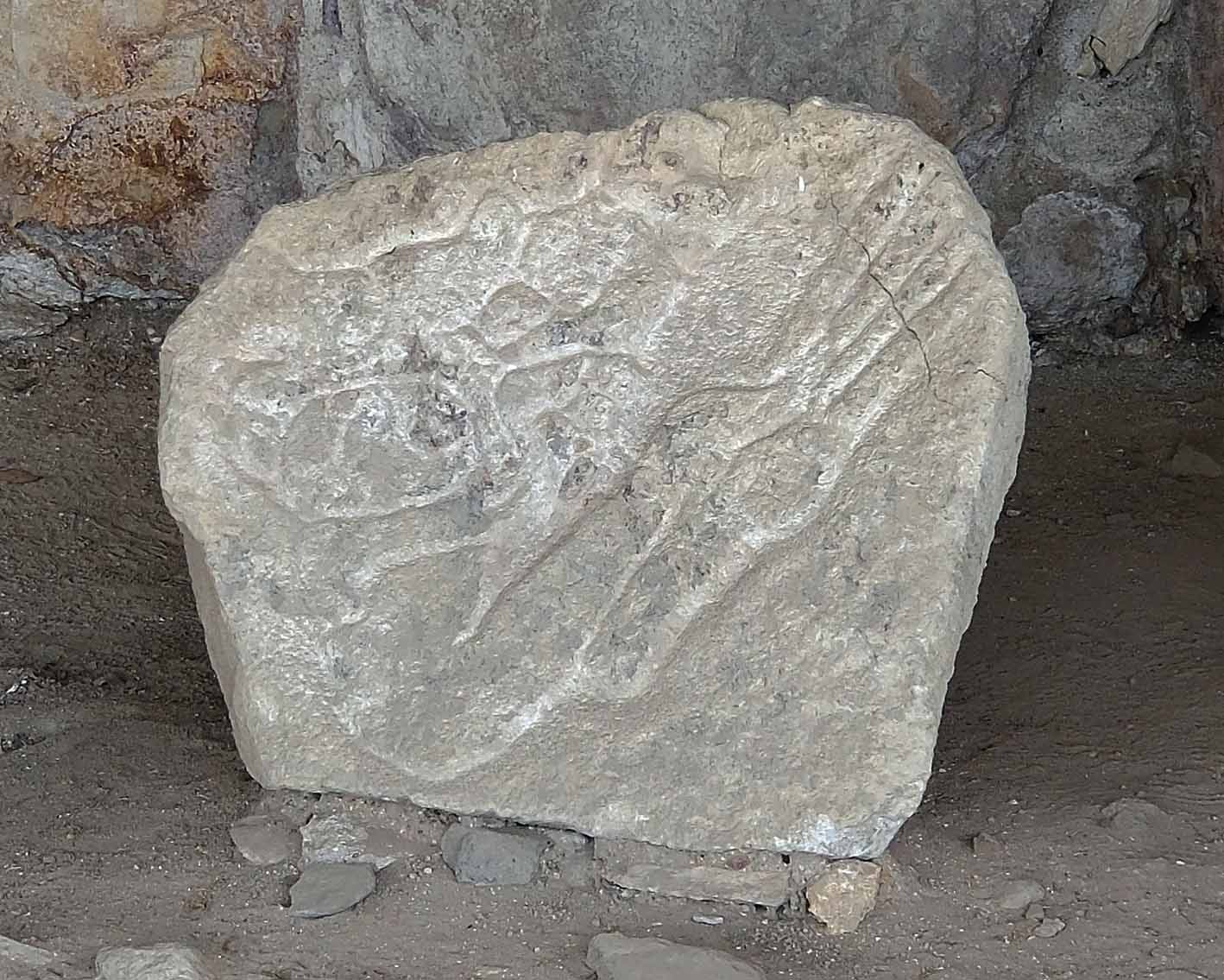
↑at Dainzu.
On the left we see what appear to be spears, and on the right a bunch of arrows - warriors.
Looking west, you can see the ball court in the center of the photo. It is said that many reliefs of gall game players were scattered around the area. Beyond that, vast farmland stretches out to the foot of the mountain.
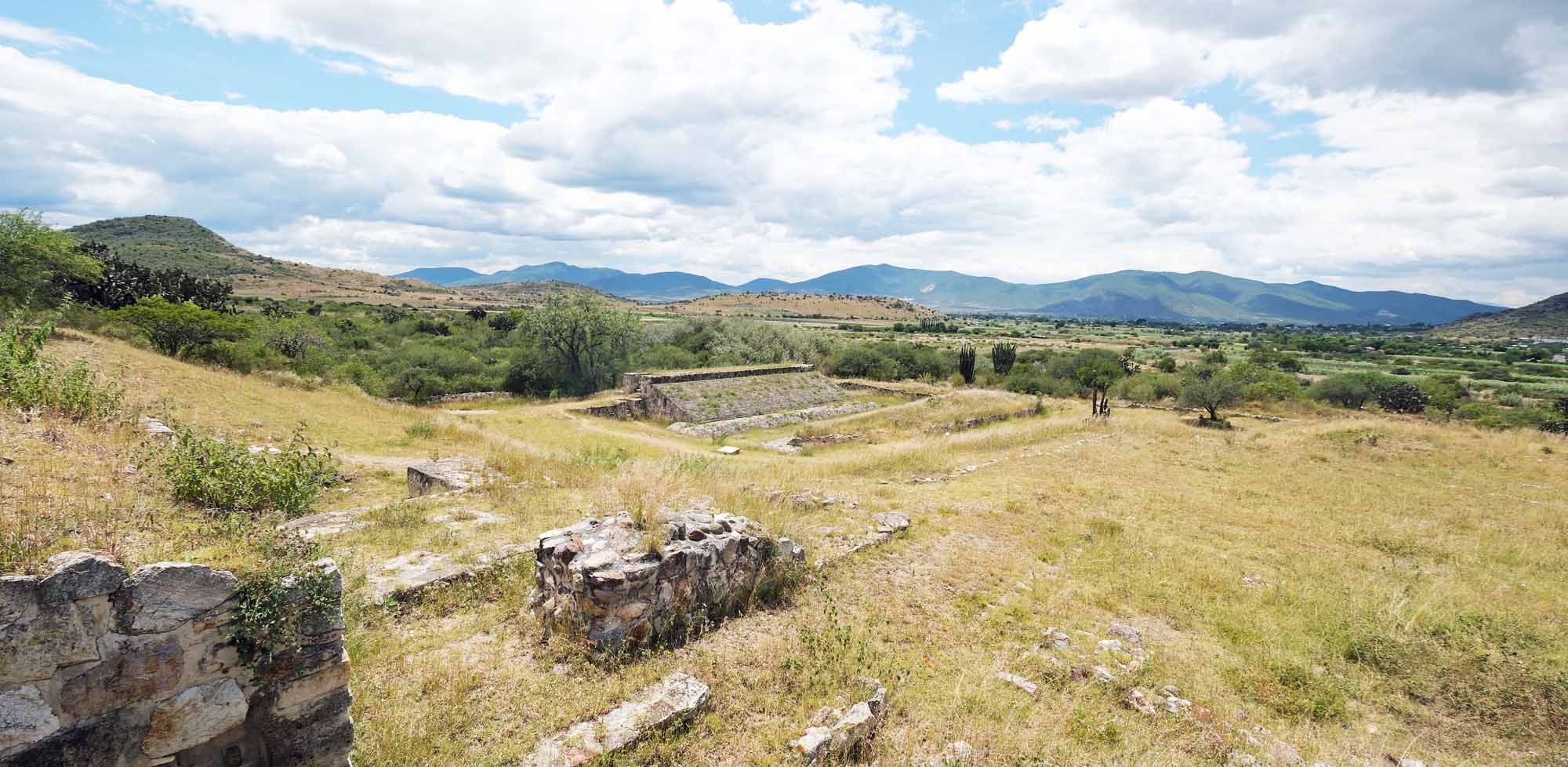
↑at Dainzu.
Teotihuacan, the Oaxaca Barrio, San José Mogote, Monte Albán, and Dainzu all seem to be connected by a haze of history. Now, let's leave the Oaxaca Valley and return to Teotihuacan.